A Guide to the Best-Selling Masai Mara Tour Packages
As one of the most popular destinations in Kenya, the Masai Mara doesn’t disappoint. From towering escarpments to sprawling unspoiled savannahs and riverine forests, abundant wildlife, and the dramatic wildebeest migration, it’s every adventurer and nature lover’s dream.
If you’re shopping for the best Masai Mara Tour Package, then you come to the right place. We have a selection of packages to fit every pocket without compromising on your African safari experience. Here’s a comprehensive look into our most sought-after tour packages.
Booking Your Masai Mara Holiday Destination Package With Us
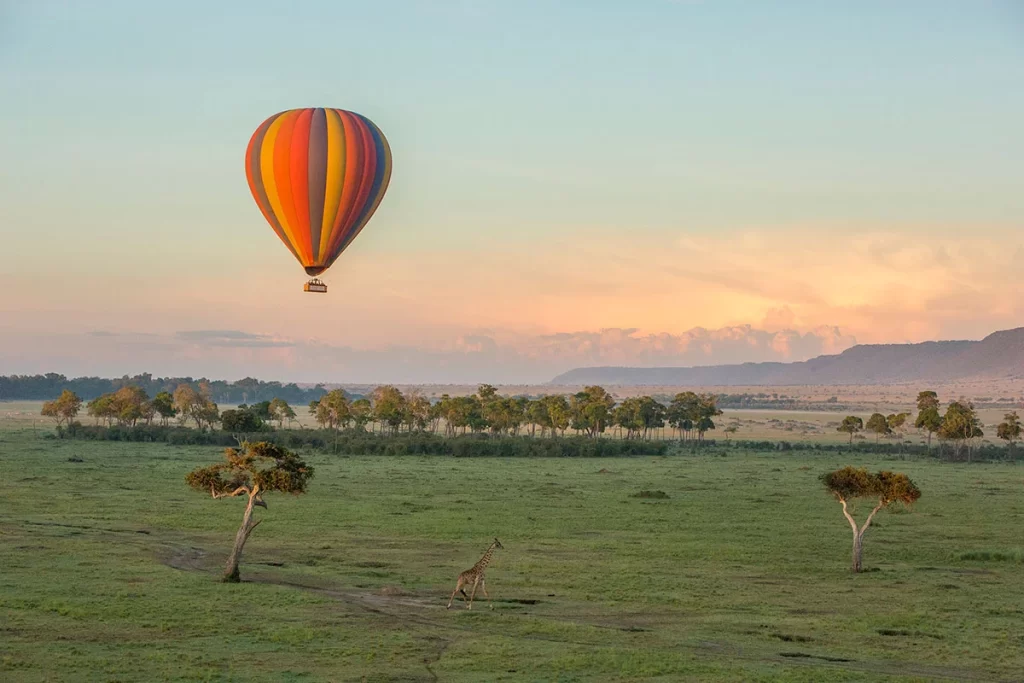
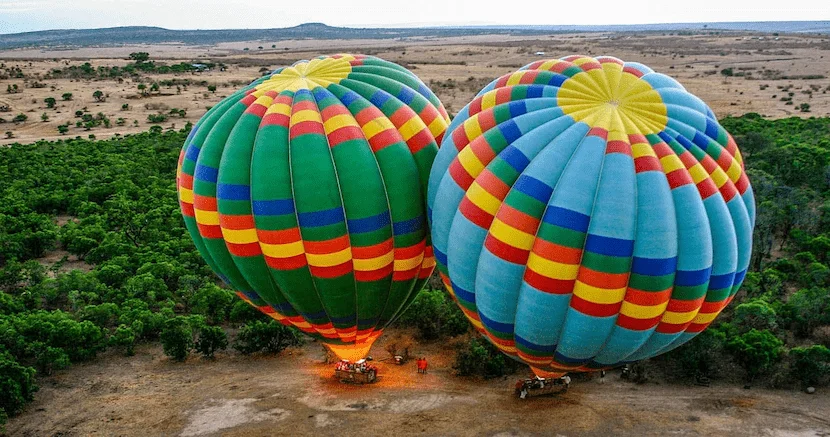
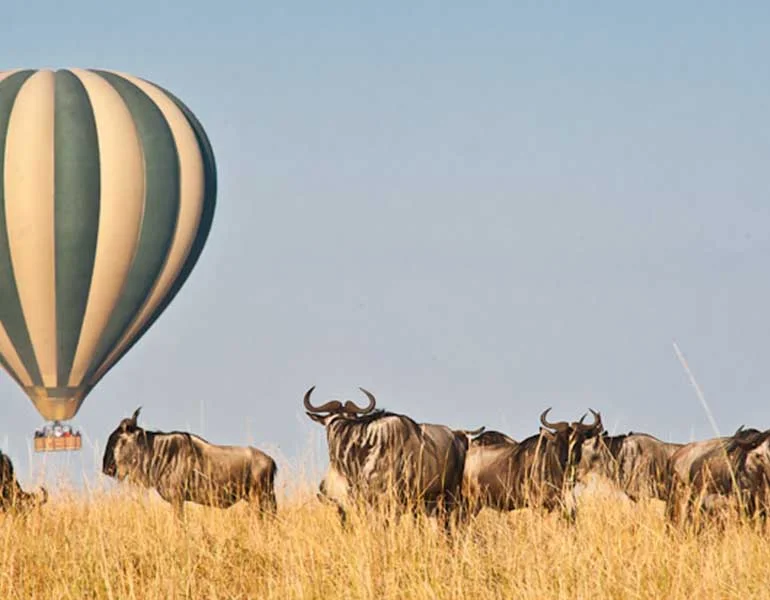
Hot air balloon safari in Masai Mara
A tour package to the Masai Mara comprises several activities including game drives, guided nature walks, and cultural visits to the local Masai communities. We will also take care of transportation, accommodation needs, and meals throughout your stay.
There are plenty of extra activities (charged separately) that you can add to your safari experience such as hot-air ballooning, horseback riding, and spa treatments. Our senior consultant James Gatheru is on standby to help plan the best holiday to the Masa Mara National Reserve.
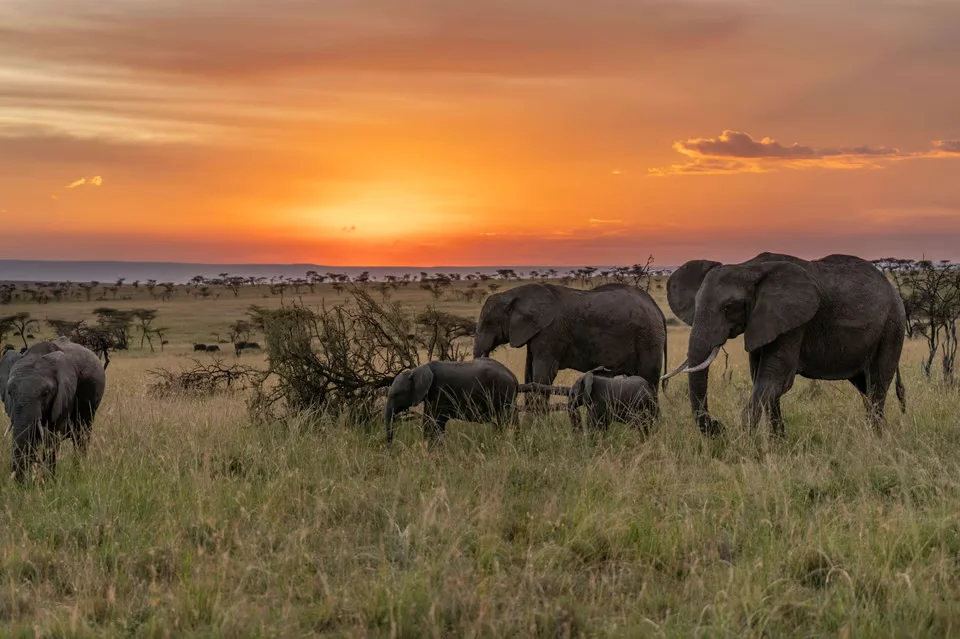
The evening sun in the Masai Mara - herd of elephants
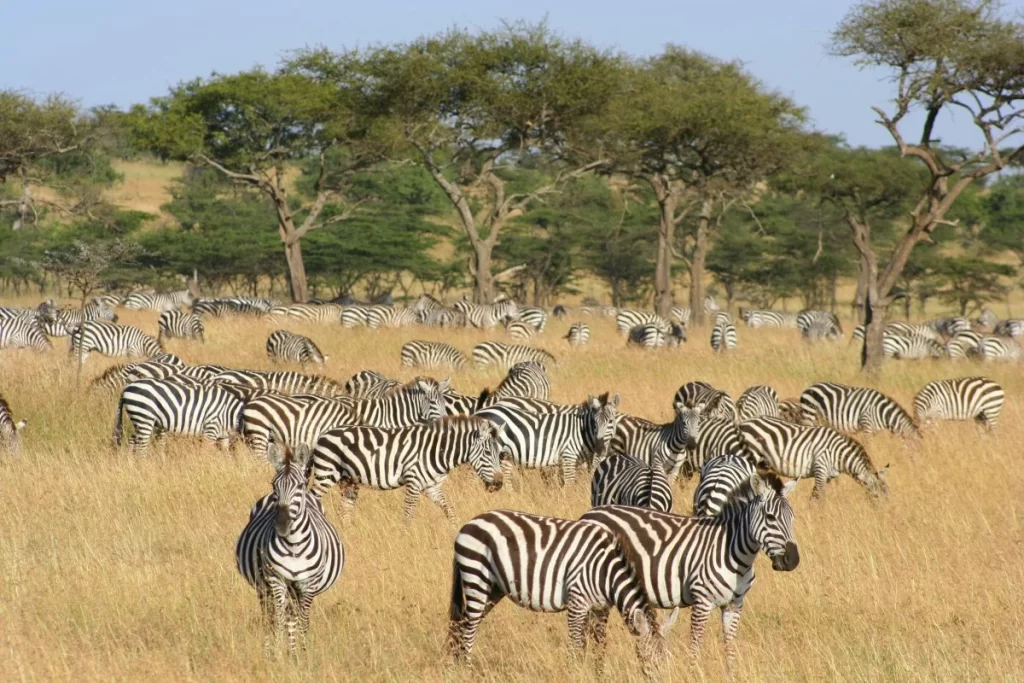
Undoubtedly Masai Mara offers some of the best safari experiences the world over. Not only is it home to the Big Five (elephants, rhinos, buffaloes, lions, and leopards) but also different kinds of grazers, browsers, and birds.
July through to September are favourite months since the weather is temperate, wildlife can be spotted easily and you can also enjoy the great wildebeest migration.
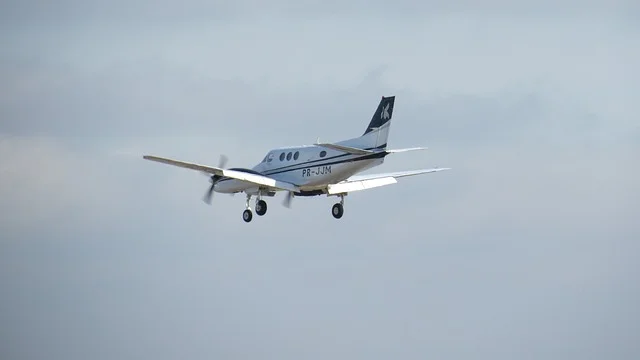
A flying safari takes about an hour from Kenya’s Capital City to Masai Mara. It’s time-saving, and preferable for camps and lodges located in the farthest regions of the Masai Mara.
On arrival at the Jomo Kenyatta International Airport (JKIA), you will be received by one of our team and driven to the smaller Wilson Airport for the second flight.
There are several airstrips within the Masai Mara and you will be flown to the one closest to your accommodation facility. Our tour guide and safari vehicle will be waiting at the airstrip to drive you to the camp.
Road Safari Tours
A safari by road offers more immersive experiences
A road safari is cheaper and potentially more rewarding as you get to see more of the country and its people and even enjoy the refreshing views of the Great Rift Valley. Once we pick you up from JKIA, you will travel in our luxury land cruiser to the Masai Mara.
The trip may take up to six hours (with at least two stops) before reaching one of the Masai Mara Game Reserve gates. From there we will proceed to your camp.
9 Best Selling Masai Mara Tour Packages
Now let’s look at our top 9 best Masai Mara tour packages.
3 Days Tour of Masai Mara and Wildlife Spotting
Stand guard mates, lions could be anywhere
A 3-day is the shortest booking that we can recommend for anyone touring the Masai Mara. With such a short time to explore the park, we try to pack as many activities as possible to ensure your stay is memorable.
Here’s what the itinerary might look like
Day 1 – Airport pickup and transfer to the Masai Mara followed by an afternoon game drive
Day 2 – Full-day game drive around the expansive park along with a picnic lunch
Day 3 – Morning drive to catch some more wildlife action followed by a visit to a Masai village. From there we will leave the park and have lunch at Narok town before heading back to the airport in Nairobi.
Unforgettable 4 Days Masai Mara Safari at Ashnil Mara Camp
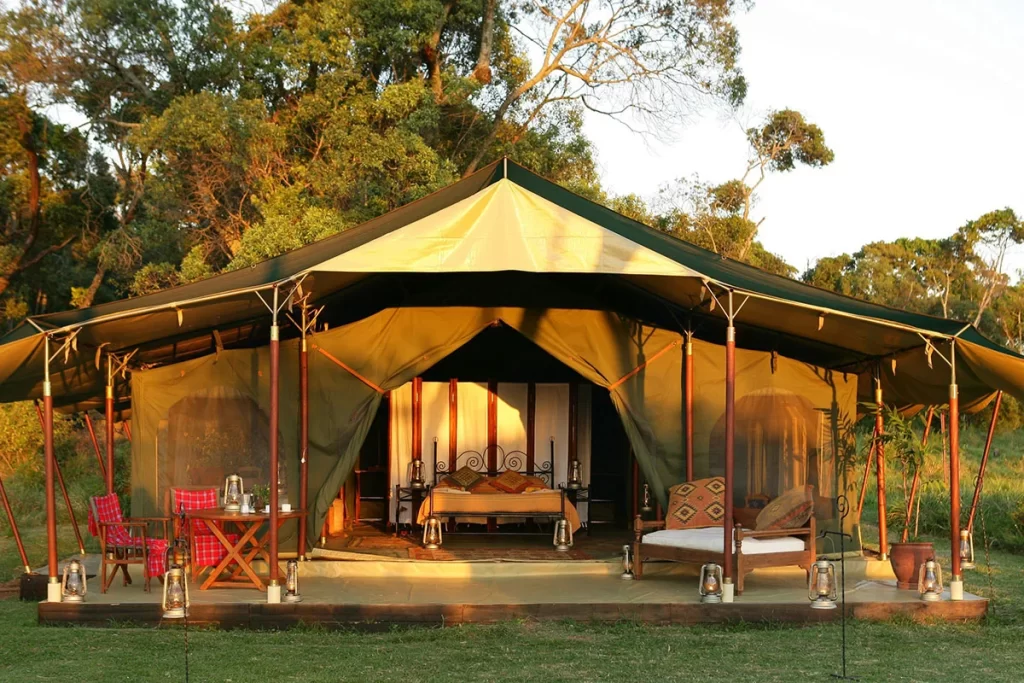
Ashnil Mara Camp, Masai Mara
Centrally located within the Masai Mara, Ashnil is a luxury camp that caters to its guests’ needs with utmost care.
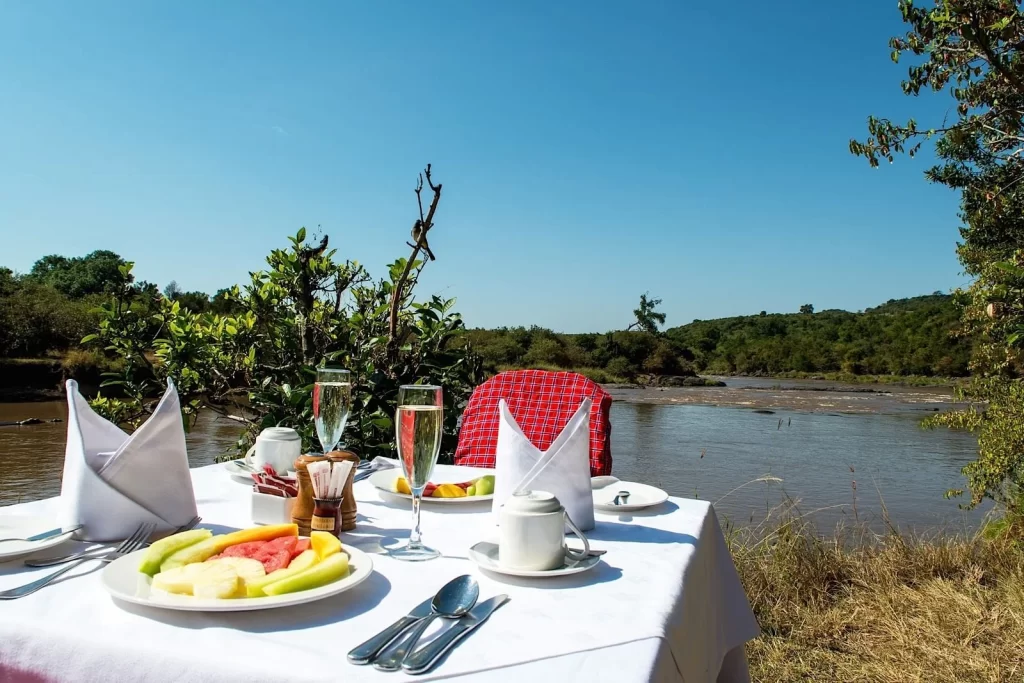
You will find its prime location along Mara River an excellent accommodation for game viewing. Wildlife take life-preserving sips of water while keeping an eye out for predators. In July-Sept guests can spot wildebeest crossing over in their thousands.
Here’s what you can expect from this tour package:
Day 1 – Pick up from JKIA followed by transfer to the Masai Mara National Reserve and afternoon drive
Days 2 & 3 – Full-day game drives inclusive of picnic lunches.
Day 4 – Morning game drive along with a cultural tour of a Masai village, departure from the park, lunch at Narok town ending with transfer to Nairobi.
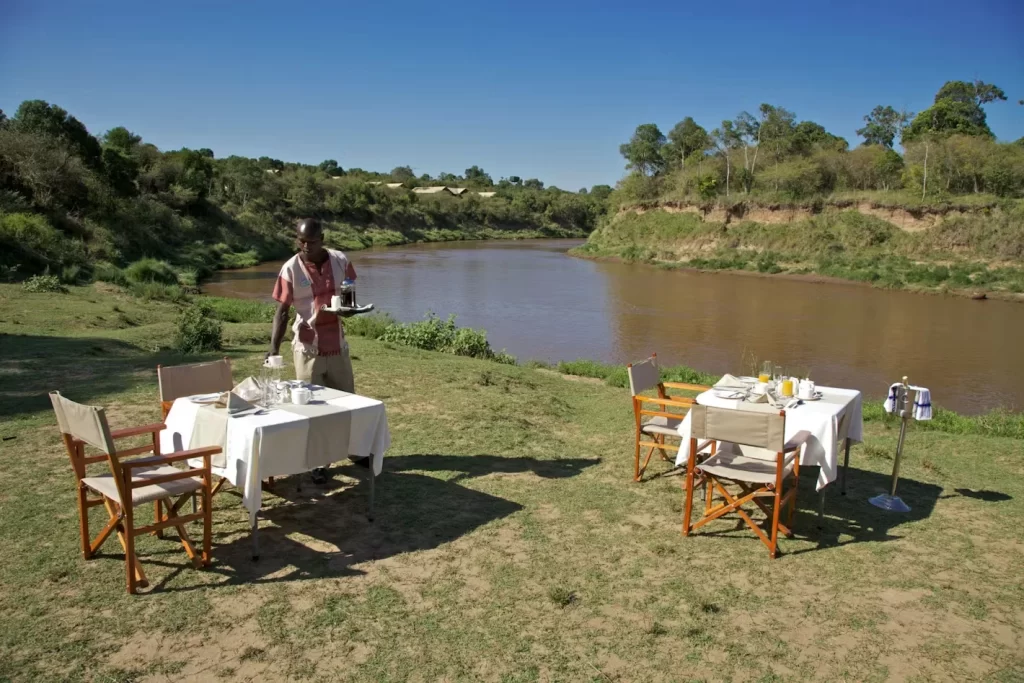
Meals by the Mara River at Ashnil Camp
4 Days Masai Mara & Lake Nakuru Safari
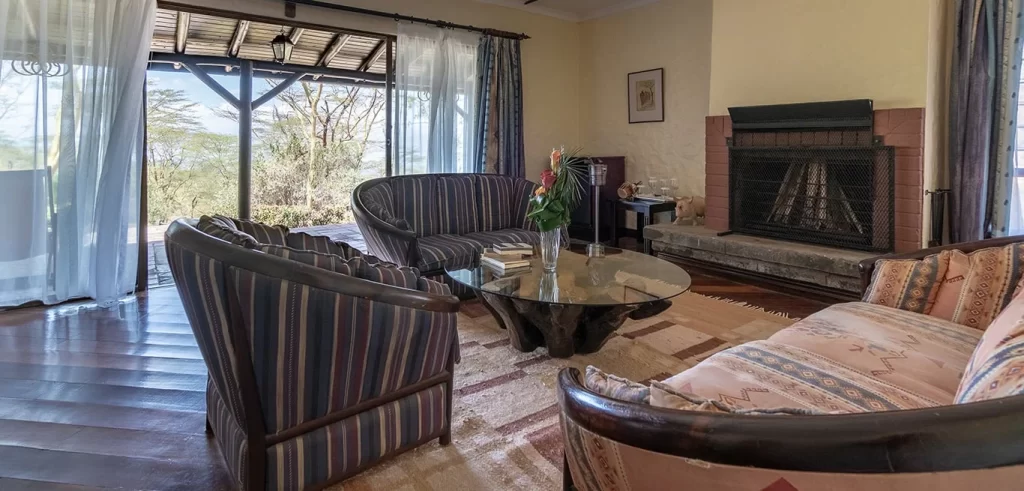
Accommodation at Sarova Hill Lodge, Lake Nakuru National Park
Day 1 – Once our team picks you up from JKIA, they will drive to Lake Nakuru National Park where you settle at the Sarova Hill Lodge before heading for a game drive
Day 2 – Morning game drive around the Lake Nakuru National Park to ensure you catch all the sights and sounds before leaving. You will have lunch at Narok town before proceeding to Masai Mara. Here you may lodge at Sekenani Camp.
Day 3 – Full day of game viewing at the Mara complete with packed lunch
Day 4 – Morning game drive and thereafter a trip to a Masai village before leaving the park, having lunch at Narok town, and then proceeding to Nairobi.
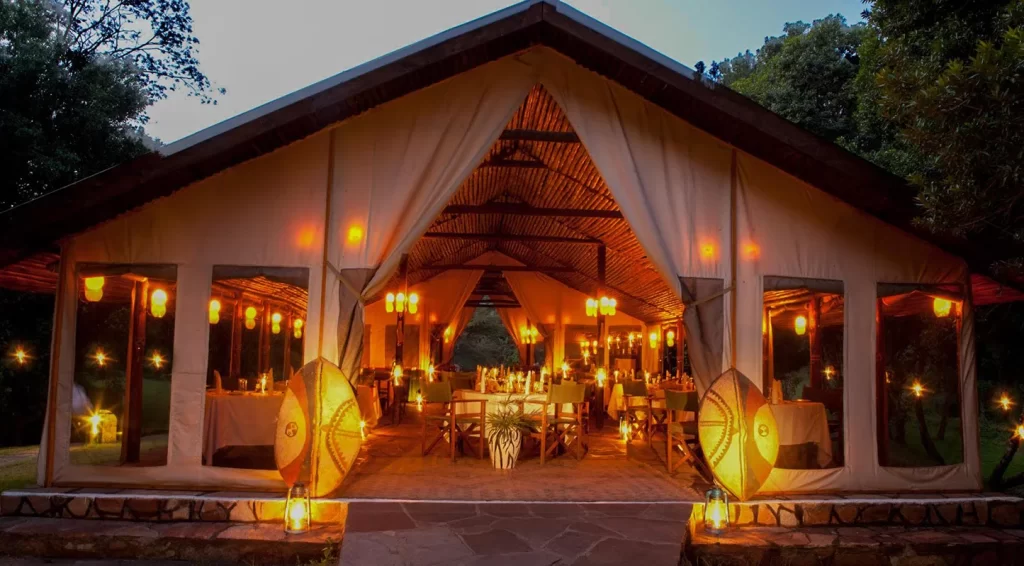
Accommodation at Sekenani Camp
4 Days Luxury Stay at Mara Serena Safari Lodge, Masai Mara
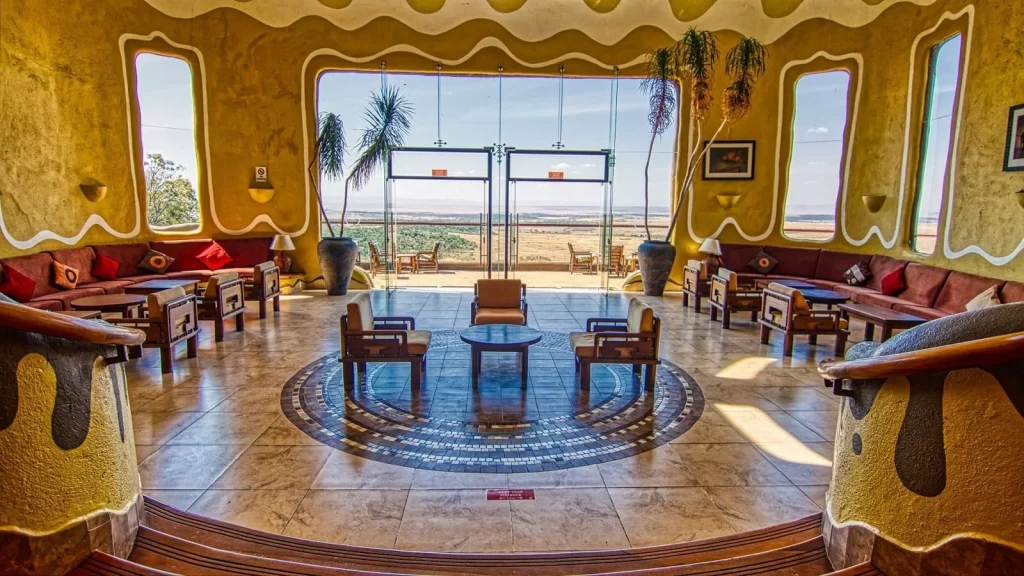
Accommodation at the luxurious Mara Serena Lodge
Are you looking for a tour package that encompasses wilderness experiences with an indulgent stay? This 4-day safari at Mara Serena Safari Lodge just might cover it.
Set on a hill, the Mara Serena Safari offers magnificent views of the grasslands, plateaus, and wild animals. When you’re not on a game drive, you can enjoy the fitness center or take a dip in the outdoor pool.
Here’s a typical itinerary:
Day 1 – Pick up from the airport, head to the Masai Mara, settle into the lodge then head out for an afternoon game drive
Days 2 & 3 – Full-day game drives with packed lunches
Day 4 – Morning game drive followed by the visit to a Masai village, lunch at Narok town, and then it’s time to head back to Nairobi
Breakfast at Mara Serena Lodge
4 Days Masai Mara Flying Safari Package
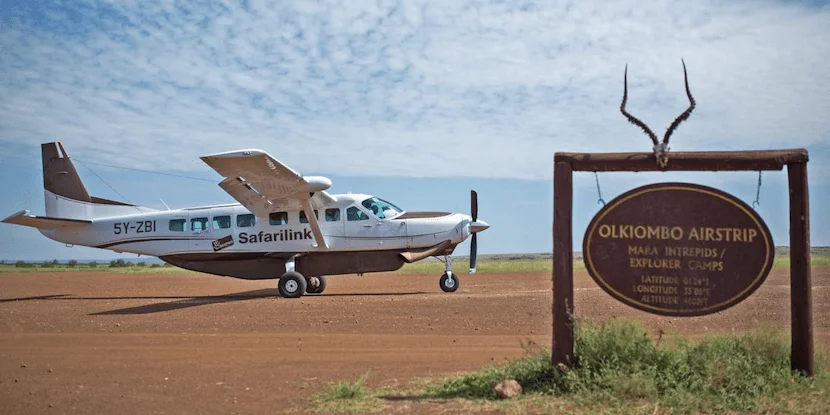
Airstrip in the Mara
As mentioned earlier, a flying safari cuts the time spent on the road tremendously which is great because you can spend more time in the African wilderness.
Here’s what your stay will entail
Day 1 – Our driver will pick you up from JKIA and take you to Wilson Airport for your flight to the Masai Mara. At the airstrip in Mara, another driver waiting to take you to the lodging and come back later for an afternoon game-viewing drive.
Days 2 & 3 – Full-day game drives within the Mara complete with packed lunch in the wild.
Day 4 – A morning game drive followed by a cultural trip to a Masai village, then it’s back off to the airstrip for your flight back to the capital. A driver will be waiting at Wilson Airport to take you to JKIA.
Breakfast in the bush? Take a balloon safari
4 Days Group Safari to the Masai Mara
Group safari package
Are you planning the trip of a lifetime with friends? This package offers groups the opportunity to visit one of the most adventurous and relaxing places in the world.
What does the offering look like?
Day 1 – A guide will be waiting at the airport and if your plane arrives early enough you can drop by the Giraffe Centre before heading to the Masai Mara. This visit is optional and comes at an extra (minimal) charge.
Days 2 & 3 – Full-day game drives that focus on spotting wildlife with stops at secluded but scenic spots for lunch
Day 4 – After breakfast, you will check out of the hotel, and then the driver will drive you to a traditional Masai village for a cultural encounter before heading back to Nairobi.
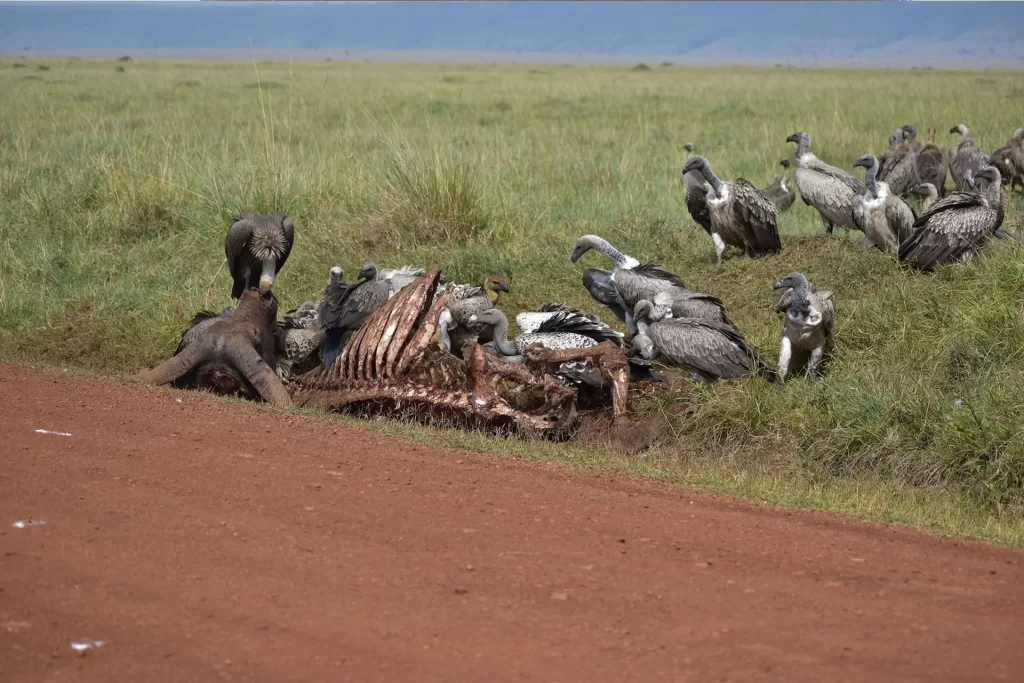
Vutures feeding on left over carcasses
5 Days Group Safari in the Kenyan Wilderness
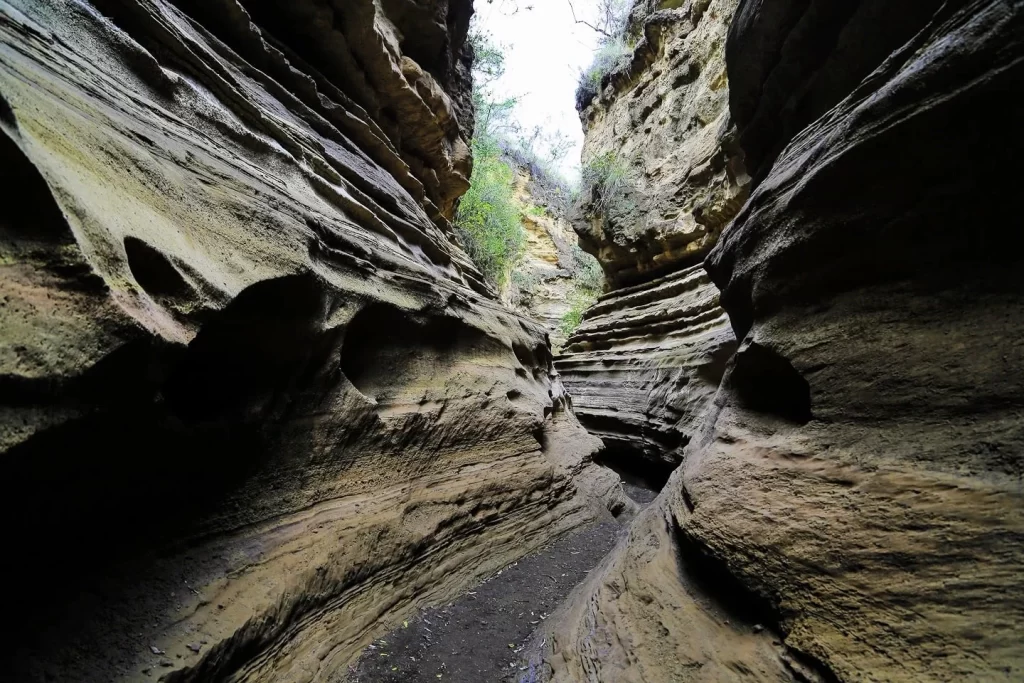
Visit the gorges of Hell’s Gate National Park during your stay in Naivasha
This package is a favorite with families and groups of friends. We will take you to two beautiful destinations where you can enjoy Kenya’s awe-inspiring landscapes. A safari to the Masai Mara with stopovers at other scenic places can be extremely rewarding.
This is what this safari in the Kenyan wilderness has to offer
Day 1 – Upon arrival at JKIA, our driver bring you to Naivasha, one of the most scenic destinations in Kenya. After checking into the hotel, you’ll be free to enjoy your dinner and evening or opt for a visit to Lake Naivasha at a nominal fee.
Day 2 – Walking and cycling around Hell’s Gate National Park to explore its cavernous and picturesque gorges and see the resident wildlife.
Day 3 – Transfer to Masai Mara. It’s a six-hour drive that is dedicated to showing off Kenya’s beauty. After checking in and lunch you’ll visit a Masai community.
Day 4 – Full-day game drive with packed lunch
Day 5 – Leisurely breakfast then leaving for the airport in Nairobi.
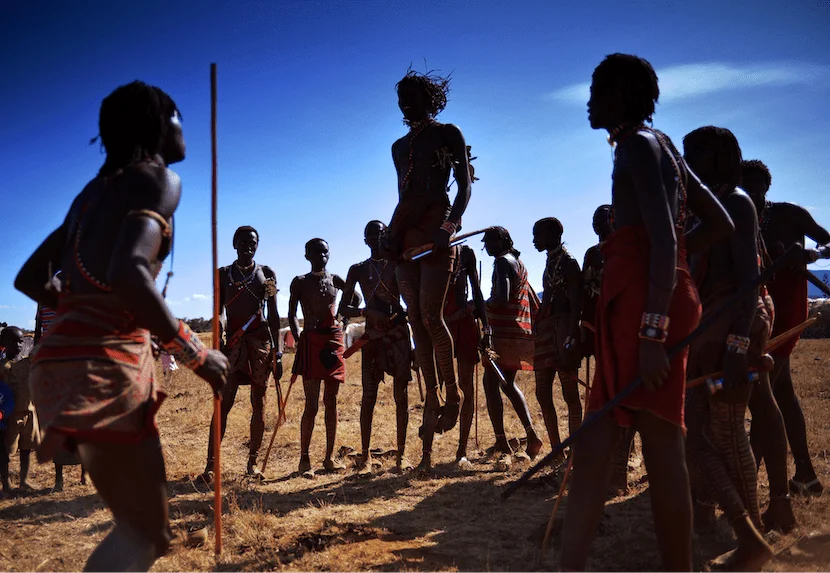
Masai Morans forming a cultural dance
6 Days Lake Amboseli, Lake Nakuru, & Masai Mara Package
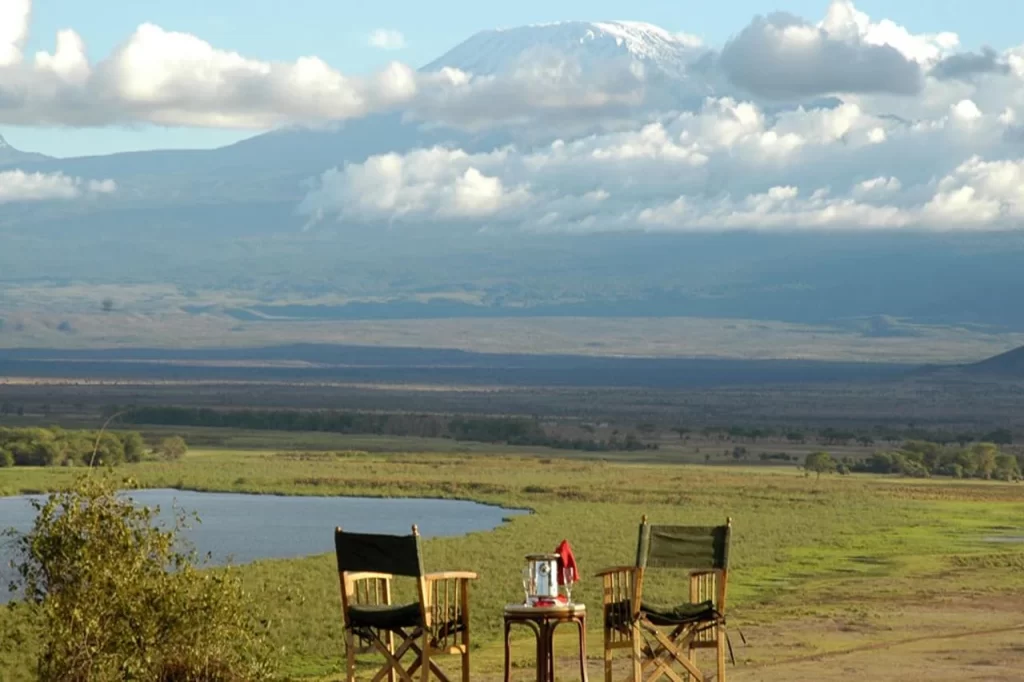
Water hole near Ol Tukai Lodge, Amboseli
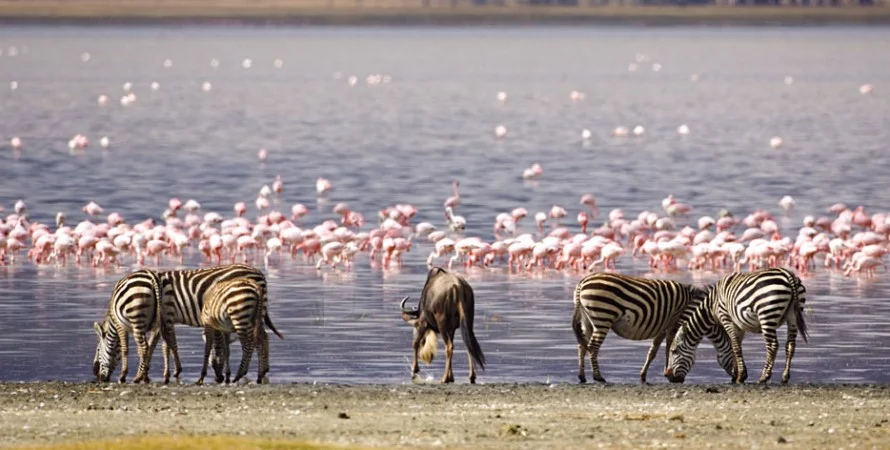
This 6-day 5-night tour of Kenya’s Wildlife safari takes you to three mind-blowing safari destinations in Kenya. From the breathtaking views of Mt Kilimanjaro in Amboseli to the flamingo-dotted Lake Nakuru shores, and the Mara, your stay will be memorable.
Plans for your holiday may look like this:
Day 1 – Pick up from JKIA and transfer to the Amboseli National Park. The road trip to this destination usually takes just over 3 hours meaning you’ll arrive in the evening. Guests check in at their lodging place and rest for the night
Day 2 – Full-day game drives at the scenic Amboseli followed by picnic lunch at Observation Hill. This is the highest point in the park providing fantastic views of the park.
Day 3 – Departure from Amboseli for a 7-hour road trip to Lake Nakuru National Park. After checking in and resting, it’s time for an afternoon game drive.
Day 4 – Morning game drive against the golden sunrise then it’s time to head to the Masai Mara. At Mara, you’ll head to a Maasai village for an insider look into their way of life.
Day 5 – Full-day drives to spot wildlife, and birds, and enjoy a packed lunch in the midst of stunning scenery
Day 6 – Starts with a leisurely breakfast before departing for Nairobi, and more specifically JKIA airport for your flight home.
The Shores of Lake Nakuru National Park
13 Days Luxury Bush and Beach Holiday
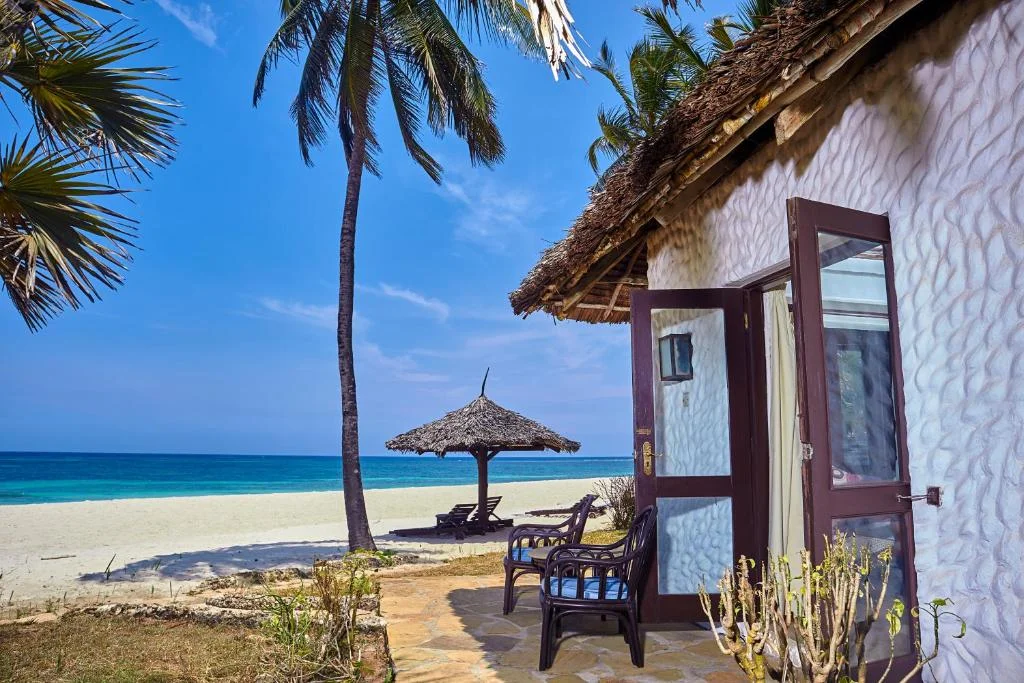
Gorgeous ocean views from Jacaranda Indian Ocean Beach Resort
With abundant wildlife, jaw-dropping landscapes, pristine coastlines, and a rich heritage, Kenya is a holiday destination best explored unhurriedly. Booking this package allows you to do just that—our experienced guides will take you to some of the best locations to spot wildlife, explore Kenya, and relax.
With 13 days to spare, here’s what the itinerary will look like
Day 1 – From JKIA we’ll head straight for Ol Pejeta Conservancy. This three-and-a-half trip culminates at Sweetwaters Serena camp where guests freshen up, have lunch, and go for an afternoon ride.
Day 2 – Morning game drive in search of the Big 5 and other animals that call this park home. After lunch, it’s off to a 4-hour road trip to Samburu
Day 3 – Full-day game drive at Samburu Game Reserve complete with packed lunch.
Day 4 – It’s off to the Masai Mara where you can choose to relax around the camp or get on an afternoon game drive.
Days 5 & 6 – Full-day game drives to witness the impressive beasts that reside in the Mara and enjoy meals in their home.
Day 7 – Get on a spectacular balloon safari followed by a tour of a Maasai village, lunch, and an afternoon game drive.
Day 8 – It’s time for a change of scenery as you say goodbye to the wilderness and hello to sandy beaches. Depending on your budget we can drive from the Mara to Nairobi then fly to Diani Beach, or fly directly from the Mara to Diani Beach.
Day 9 – Your sea adventure will start with a full day of deep-sea fishing in the Indian Ocean. You can revel in your catch before releasing them into the water. Aboard the boat will be plenty of refreshments and sandwiches.
Day 10 – Spend your day by the sea lounging, swimming, and enjoying the expansive turquoise waters. In the evening we will have a dinner cruise planned for you.
Day 11 – Your morning starts with scuba diving at depths that are comfortable for you. Afterward, we will leave you to relax at the hotel. You can also choose to stroll through the coastal town.
Day 12 – Spend a day at Wasini Island swimming, snorkeling, diving at Kisite Mpunguti Marine Park, and spotting whales and dolphins.
Day 13 – Spend a leisurely morning by the sea before flying back to Nairobi and to the JKIA so you can catch your flight home.
Sweetwaters Serena Camp at Ol Pejeta Conservancy
Customizable Masai Mara Packages
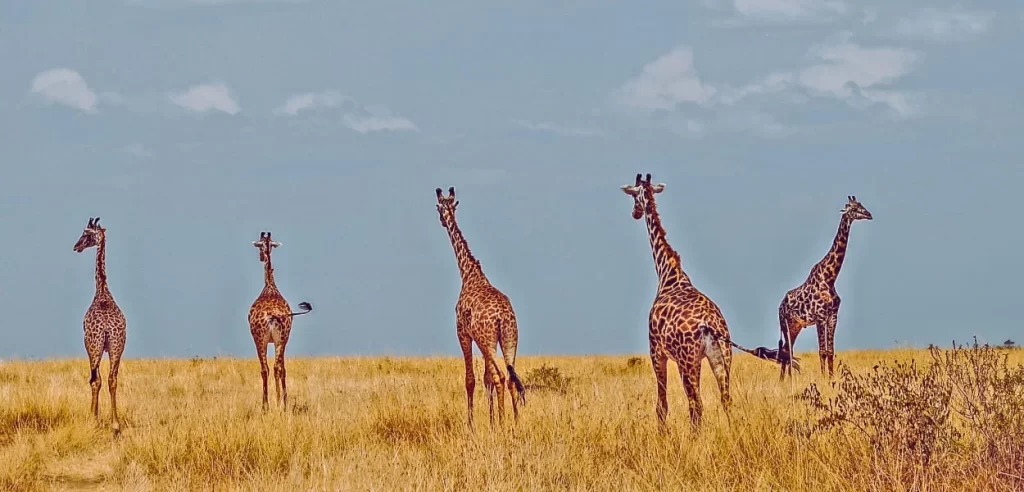
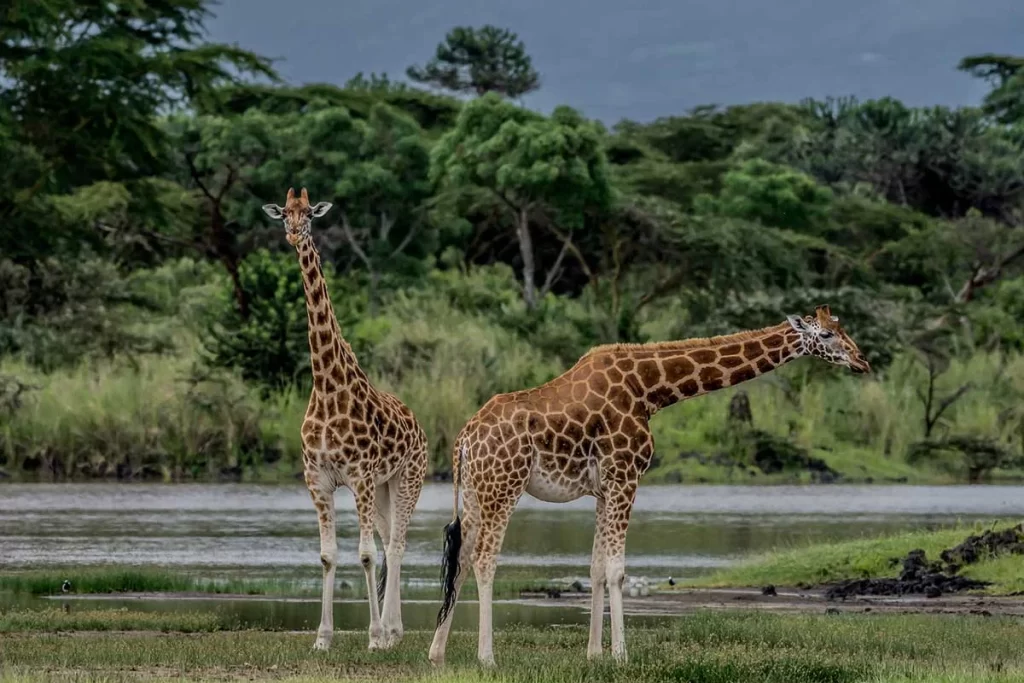
Giraffes in the Mara
If you’re looking for exclusive and unique experiences designed specifically for your needs, we’ve got you covered. Our team will listen to your needs and expectations before tailoring a befitting safari experience. Our most popular customized packages include:
Tour Packages to Spot the Big 5
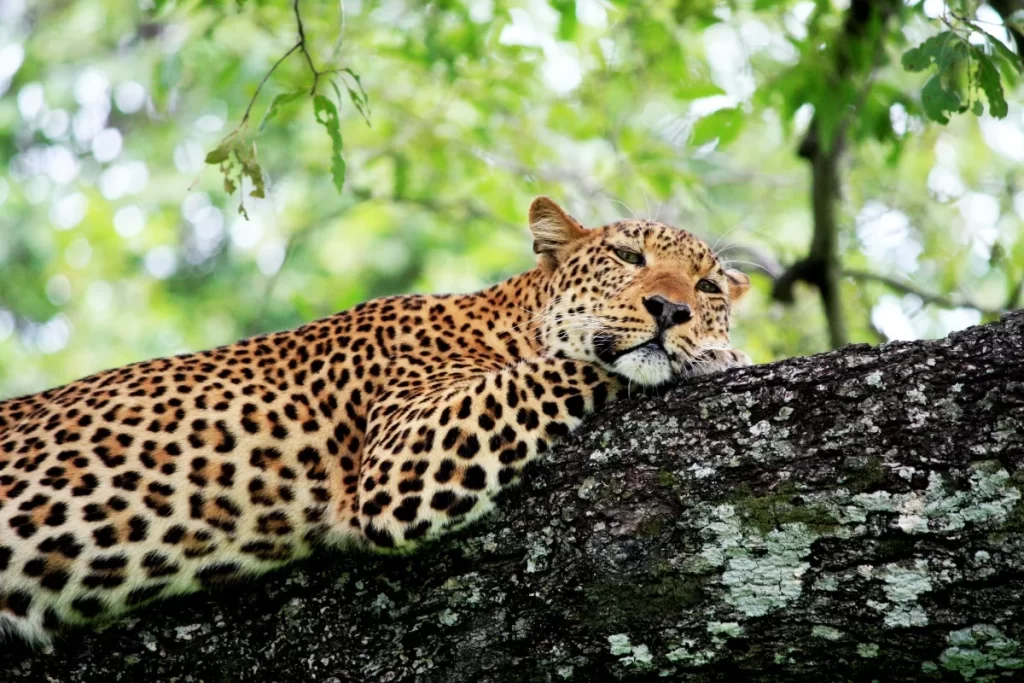
Don’t mind me, I’m just chilling
Ah, the Big 5—lions, leopards, elephants, rhinos, and buffaloes. These animals earned this title from big game hunters of the 19th Century who considered them Africa’s most dangerous animals to hunt. Especially on foot.
Today, tourists from all over the world flock to the Masai Mara and the other parks in Kenya to see these majestic creatures. Our packages focus on game drives to ensure you can view the living and thriving in the wild.
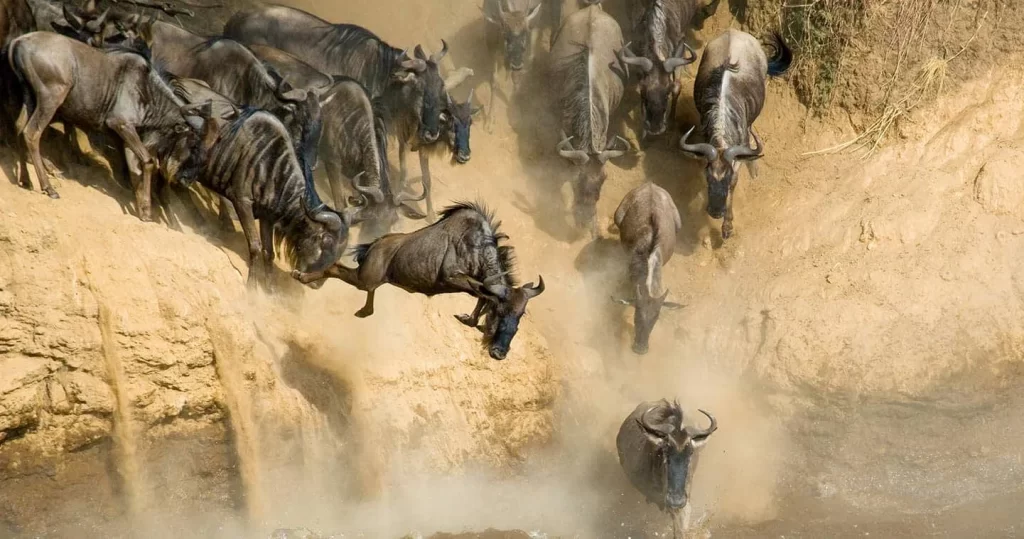
Jul-Sept are the best times to come into the country to view a million plus wildebeests and the other grazers make the all treacherous journey across countries.
With hungry predators trailing them, an unforgiving river ahead, and starving crocs lurking in the waters, these creatures still push forward. Here, some are swept away by raging waters, others become dinner, but more survive and live to fight another day.
This spectacular event attracts a lot of tourists meaning you’ll need to book well in advance to secure accommodation.
Honeymoon Packages
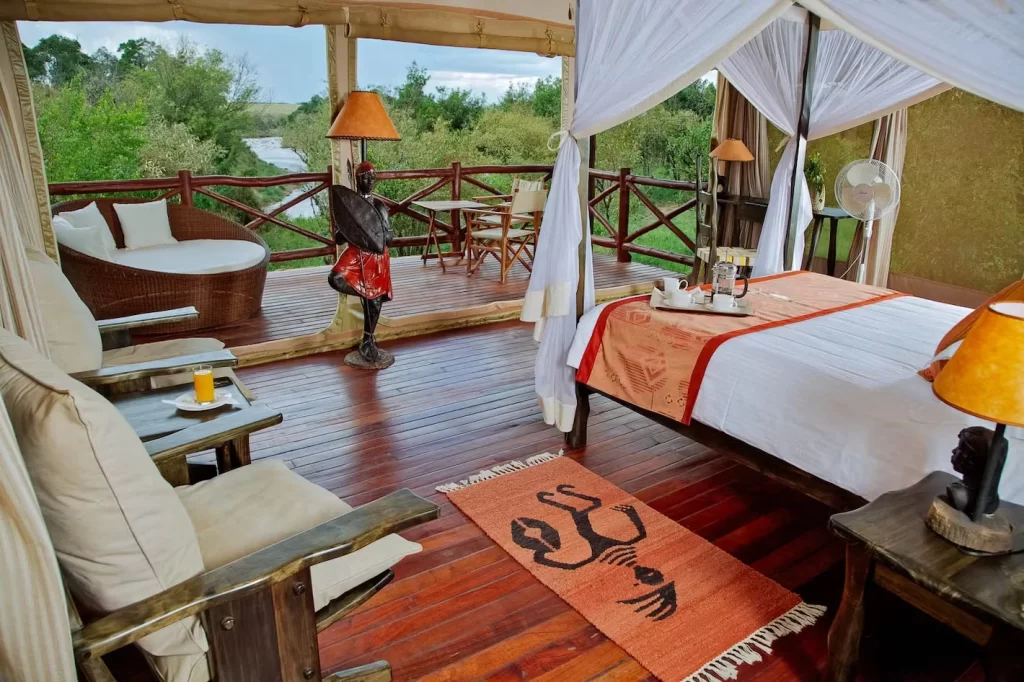
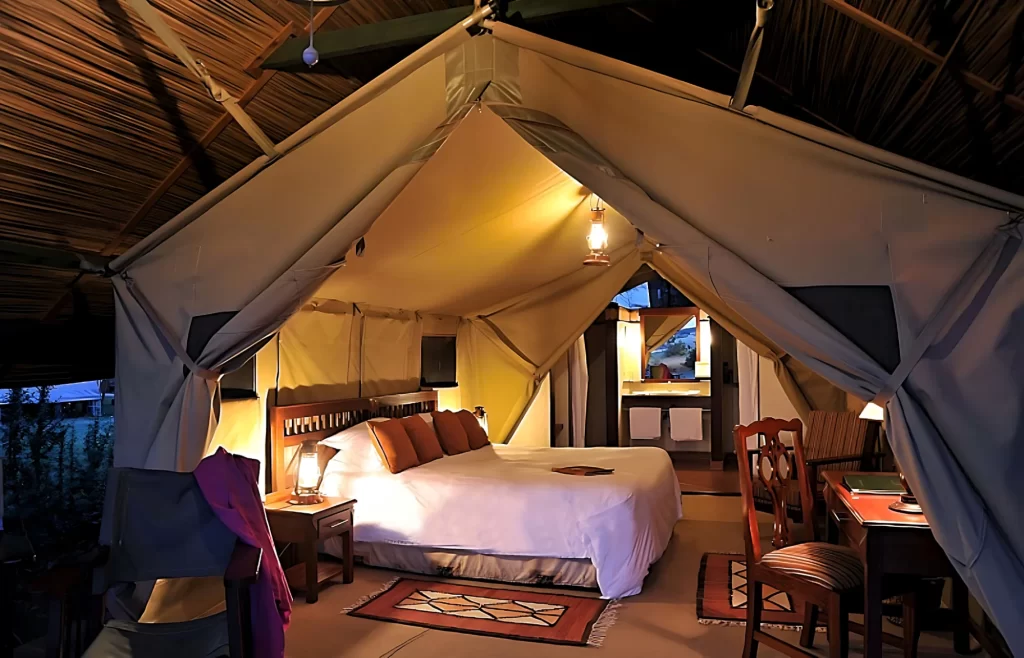
The honeymoon suite at Elephant Pepper Camp
Adventurous honeymoons are made in Africa. If you’re looking to combine your love for adventure and romance, we have the perfect honeymoon package.
Through our honeymoon package, you will get up close to wildlife and enjoy a pampered stay at the lodge/camp.
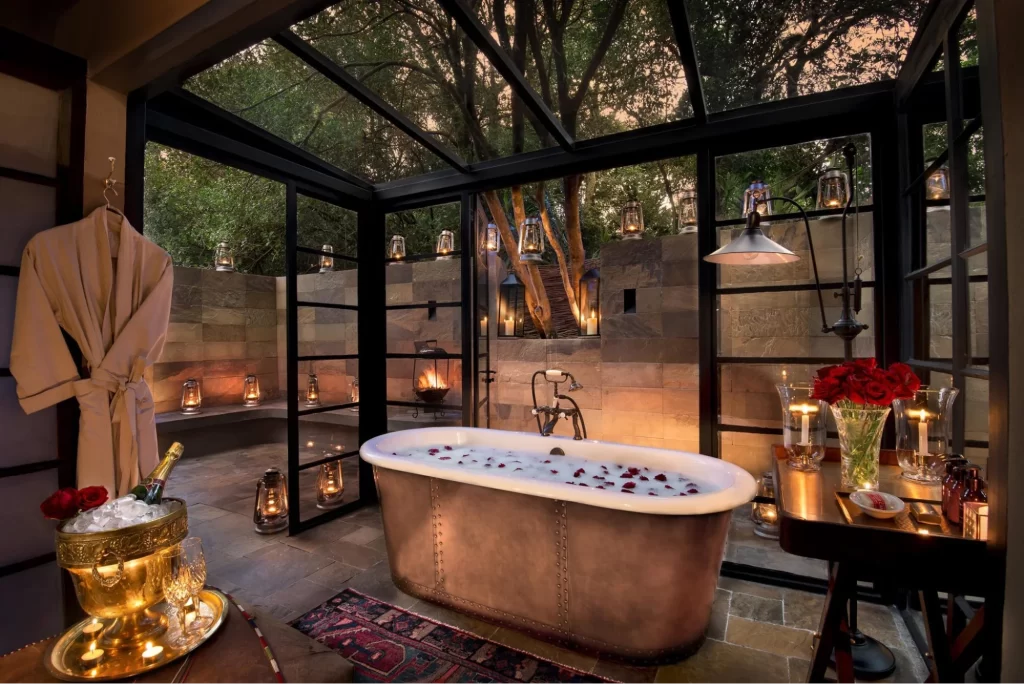
Depending on the accommodation facility, you can also enjoy a couples’ massage, private candlelit bush dinners, as well as romantic outdoor baths. Some go as far as leaving cute surprises in your room.
Essential Information To Visit Masai Mara
Planning ahead will make your trip smooth
If you have already made the decision to visit the Masai Mara, it’s important to do some planning for a smooth stay.
Here are some essential guidelines:
Cover the Basics
Be certain about your travel dates
Choose your travel dates. This is particularly important since some months are harder to secure a booking than others.
If you’re coming down for the wildebeest migration, you may need to book your travel dates months in advance.
Determine the number of people who will be coming and specify the room you prefer—single, double, family room, honeymoon suite, etc.
What kind of transportation do you prefer once you arrive? Will it be a flight or a road trip? If you choose the latter, would like to travel on a luxury land cruiser or shared tour van?
Choose a Tour Operator
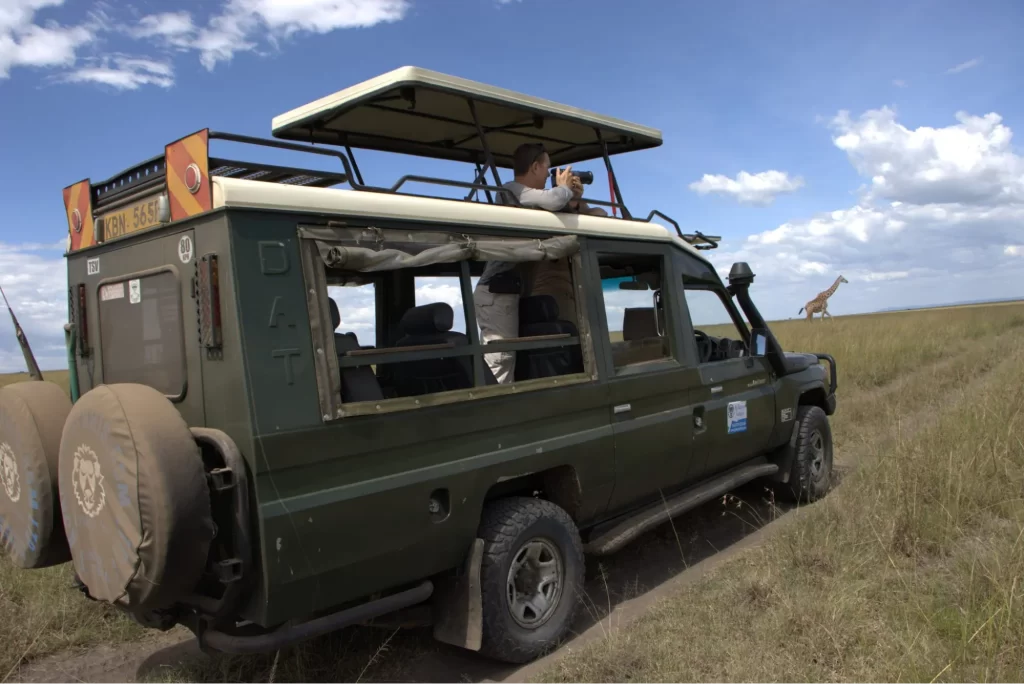
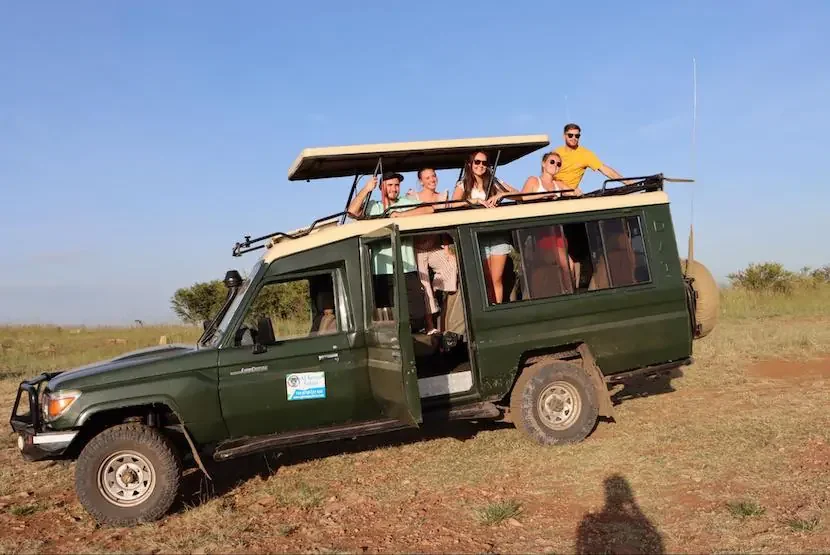
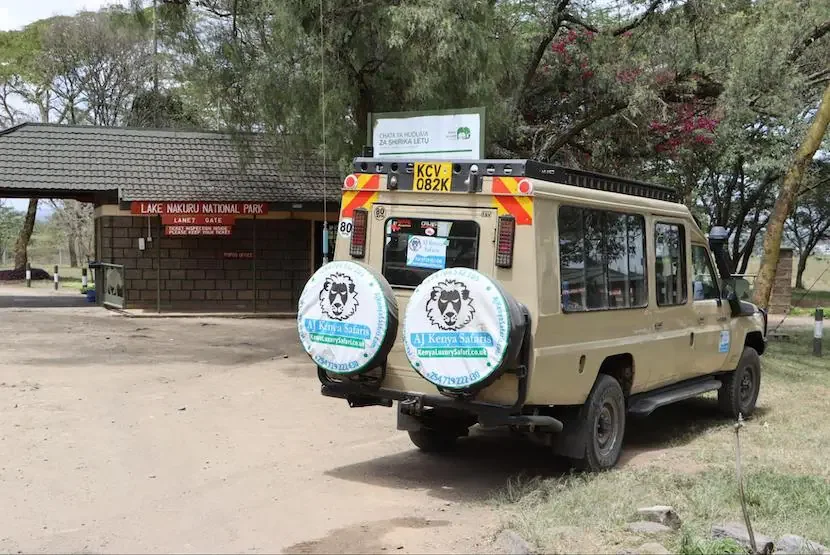
AJ Kenya Safaris luxury tour vehicle
Go for a reputable and knowledgeable tour operator to ensure you get value for your money. Don’t be afraid to ask questions or clarifications from the operator before appointing.
Determine Your Level of Luxury
A pampering bubble bath at the andBeyond Bateleur Camp
Within the Masai Mara are hotels that cater to different budgets. You’ll find adventure budget camps, mid-range lodges and camps, and uber-luxurious accommodations. Determine how far your budget can extend and find the hotel that fits it.
Throw in Optional Activities
Hot air balloon safari at the Masai Mara
Other than game drives, guided walks, and cultural visits, you can add some more activities to enhance your safari experience. These optional activities come at an extra charge.
They include hot air balloon safaris, spa treatments, bush meals, and short visits to other interesting places like the Giraffe Centre or the Nairobi Safari Walk.
Book Your Safari
Early booking ensures you can secure accommodation
Having determined the above information, your tour operator will share a quotation based off your itinerary. If you’re happy with the quote, you can proceed to book your safari and deposit payments as the tour operator advises.
From here, you’ll just need to show up and leave the rest to us. Once again, we invite you to connect with our team and plan a memorable African safari.
FAQs
Best Time to Visit Masai Mara
Thanks to the abundant resident wildlife, the Masai Mara is an all-year-around tour destination. The best time to visit the Mara depends on the activities you’d love to undertake.
If you want to witness the great annual migration then schedule your visit between July-Oct. If you’re trying to avoid crowds and love lush picturesque scenery, then the wetter months of April and May are more appealing.
What Month Is Best for Hot Air Balloon Rides On Masai Mara Tours?
September through to April are the most ideal months for balloon safaris.
Is There a Risk of Malaria on Safari?
Thanks to the high elevation of the Masai Mara, the risk of Malaria is low but it exists. Lodges/camps in the Mara fit their beds with mosquito nets to keep pesky insects out. We recommend carrying mosquito repellant and wearing long-sleeved clothing and pants in the evenings to minimize insect bites.
Is There an Airport in Masai Mara?
There is no airport in Masai Mara but there are multiple airstrips scattered within the Mara to make transportation from Nairobi to your camp convenient.
How Do You Get To Masai Mara From India?
You have multiple options to reach the Mara from India including airplanes and ships. Flying is a better option and there are various airlines that facilitate travel such as Kenya Airways, Air India, RwandaAir, as well as IndiGo.
From the Jomo Kenyatta Airport, traveling to the Mara can happen by road or air to an airstrip closest to your chosen accommodation.
Can We Stay Inside Masai Mara?
We recommend a minimum of 3 days stay. The park is extensive with plenty to see, the more time you have, the more you will enjoy and appreciate the wilderness in front of you.
Is 2 Days Enough for Masai Mara?
As an experienced tour operator we we recommend 3 days at the Mara. Two days are too few but if that’s all you have then we can try and work something out.
How Much Is a Trip to Masai Mara Cost?
The price is based off the time of visit, duration, people accompanying you, the activities you want to undertake, plus accommodation options. Connect with us to find a package that best fits your budget and book it.
Can I Enjoy a Meal in the Middle of the National Park
Yes, you can. When you’re going out on a full-day game drive, your guide will identify a suitable place for you to enjoy a packed lunch. Further, bush dining and sundowners are available at an extra charge.
Those who go on balloon safaris typically enjoy a bush breakfast after the ride. Bush dining and sundowners are
How Long Does It Take From Nairobi to Masai Mara?
It takes approximately 45 minutes to travel to the Mara by air. If you opt to travel by road, then it may take 6-7 hours to arrive at the gates of the Masai Mara. From there, you will spend some additional time on the road to reach the camp/lodge.
How Big Is the Maasai Mara?
The Mara covers an area of 1,510 square km. Its ecosystem comprises riverine forests, plateaus, and sweeping plains.