A Comprehensive Guide to the African Safari Experience
Ah…. the wonders of an African safari.
A chance to see the tree-climbing lions of Zambia display their antics. Rejuvenate your spirit at the other-worldly wonder that is Victoria Falls.
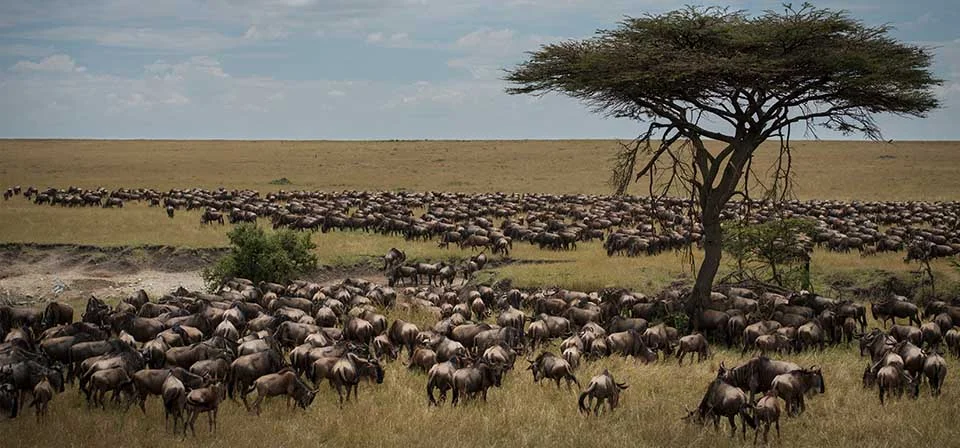
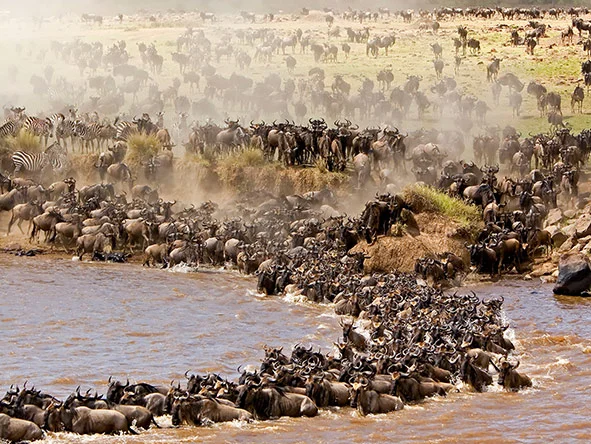
Or relax in the savannah grasslands witnessing hordes of wildebeests beat all odds to migrate between the Serengeti National Park and the Masai Mara National Park.
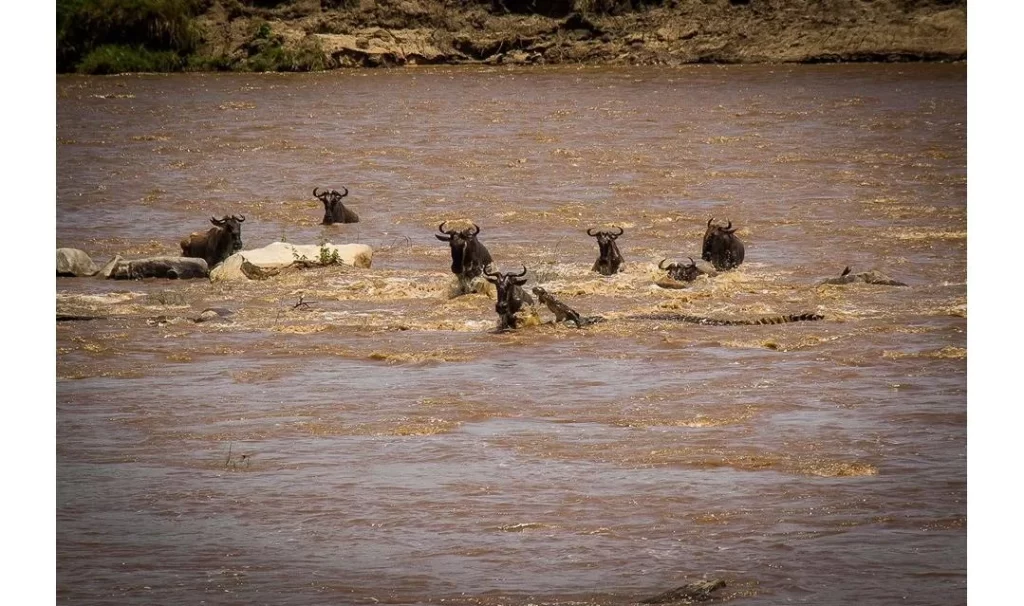
By all odds, we’re talking about hungry predators trailing them, a treacherous river that can easily sweep them away, and massive starving Nile crocs anticipating dinner.
All this amid breathtaking landscapes, unbeatable sunsets, starry nights, and the rich African culture. It is one of the few places in the world that will leave you craving for more.
If you’re planning a safari in the African wildlands, here is our guide on some of the best national parks to visit.
African Safari: 8 Beautiful National Parks in Africa
The expansive wilderness of Africa
Most people imagine that Africa is this gigantic wildlife preserve when in essence, there are approximately 225 national parks in the whole continent. Together they take up just over 8% of the landmass.
Each national park is endowed with different ecosystems, habitats, landscapes, and animal species. Which really makes it hard to say one is better than the other since they are all unique.
Here is our list of the 8 best wildlife parks for African safari.
Masai Mara National Reserve, Kenya
Watch out for the croc!
This prominent wildlife reserve is beloved by adventure lovers and those who want to enjoy a tranquil moment away from the world’s bustle.
Masai Mara is marked by vast grasslands, rolling hills, dense woodlands, rivers, and dry riverbeds merging beautifully into one. You can go on a hot air balloon safari to enjoy bird-eye views of the park against the rising sun.
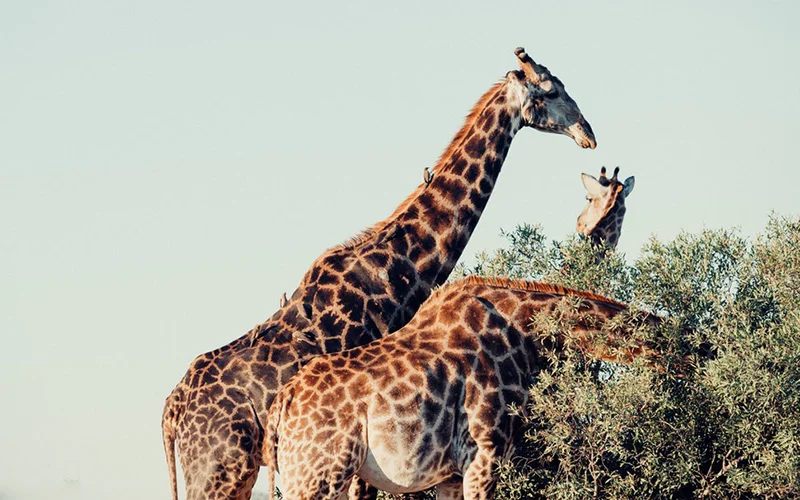
All the big five (elephants, rhinos, buffaloes, lions, and leopards) can be seen here. The spotted hyena, silverback jackals, hippos, giraffes, warthogs, Grant’s gazelle, eland, zebras, wildebeest, hippos, and olive baboons also call this park home.
Resident as well as migratory birds delight bird lovers while rare flora will satisfy curious nature lovers.
Wildlife grazing in Masai Mara, Kenya
African safari lovers come down from all over the world to witness the great wildebeest migration where millions cross the Mara River from neighboring Serengeti to find pasture.
On this perilous journey, the wildebeest are hunted by the big cats, and crocs lurk in the murky rivers waiting to make a meal out of them. Many die, but more survive and move on.
The Serengeti National Park, Tanzania
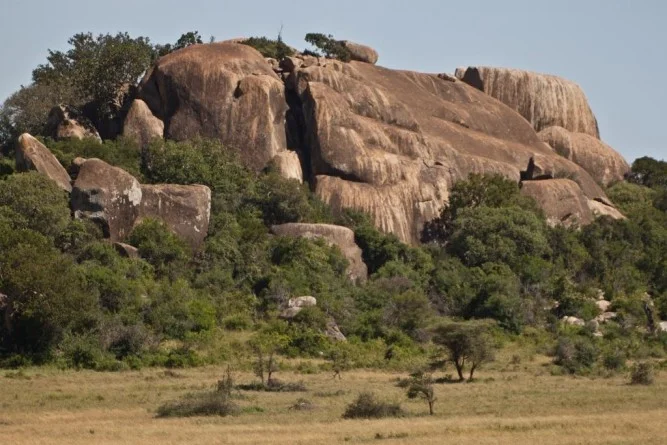
Moru Kopjes, Seronera Valley - Serengeti, Tanzania
If there is a park that teems with all kinds of wildlife and enjoys such expansive and diverse ecosystems it has to be the Serengeti National Park. At this National Park, nature reminds you how small you are in the grand scheme of things.
The park has been divided into three distinct regions—Seronera Valley, the Western Corridor, and Northern Serengeti.
As with the Masai Mara, Seronera Valley is home to the big five alongside other animals making it perfect for game viewing alongside photography safari packages.
The Western Corridor is where the Great Wildebeest migration happens while the Northern Serengeti is remote but still wildlife-rich and rewarding to visit.
The Ngorongoro Crater, Tanzania
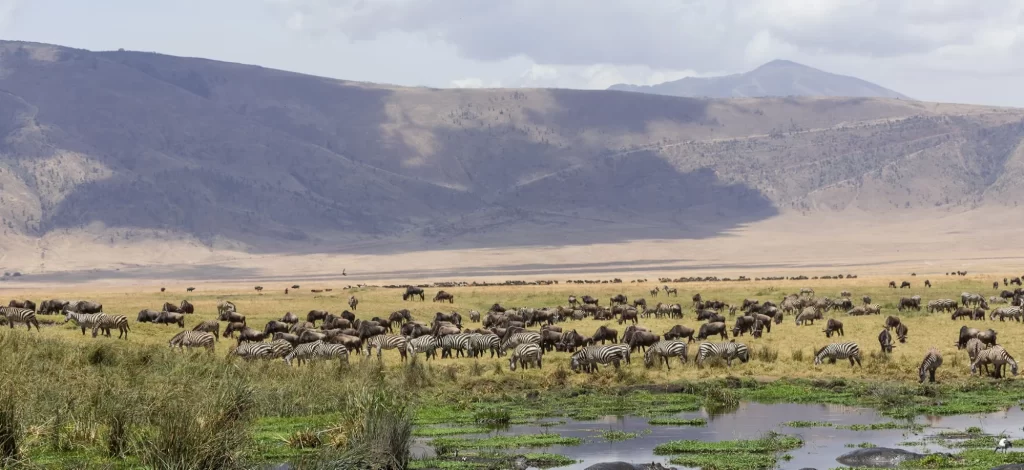
The Ngorongoro crater is particularly interesting to visit. It boasts up to 25,000 animals including four of the Big Five, golden cats, as well as wild hunting dogs.
Here, large prides of lions, leopards, and hyenas are always on the hunt meaning there is never a dull moment at the Ngorongoro crater.
Bwindi Impenetrable National Park, Uganda
Bwindi Impenetrable Forest
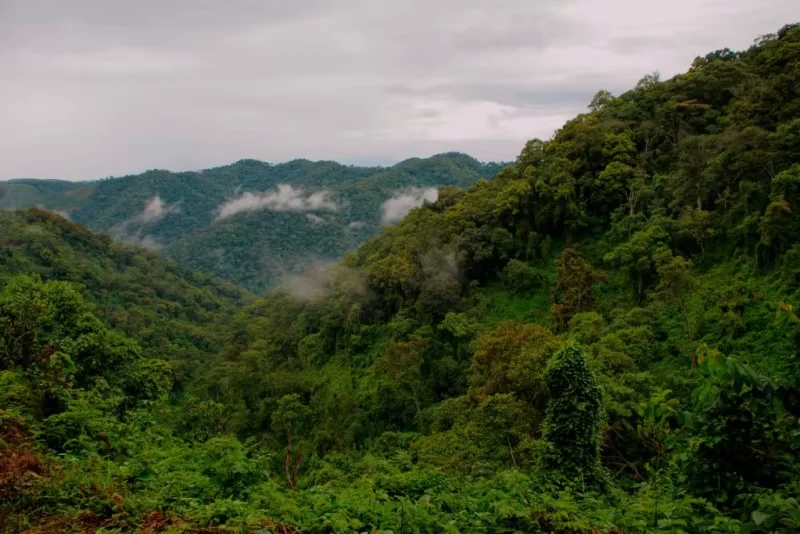
A huge primeval forest where tall hardwoods mingle with towering bamboo while vines, ferns, and other plants make up the dense ground cover. Thanks to the nearby mountain ranges, the forest is often covered in mist giving it an ethereal feel.
This is the best way to describe the Bwindi Impenetrable National Park. Actually, the word Bwindi is derived from the local Runyakitara language meaning “impenetrable.
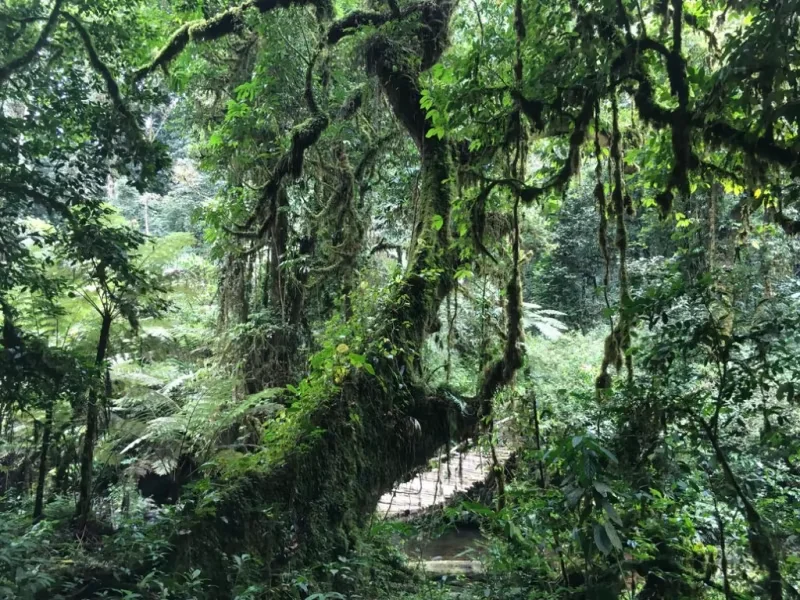
Having said that, its rugged challenging terrains provide some of the most rewarding trekking experiences you can enjoy. Not only will you enjoy fantastic viewpoints but also get to learn about the different flora and fauna.
A Trekking route in Bwindi Impenetrable Forest
Bwindi Impenetrable National Paris is one of the few places where you can see the mighty mountain gorillas in their habitat. These gentle giants go about their business and remain largely unaggressive unless provoked. You can photograph the gorillas but remember to keep your flash turned off.
Okavango Delta, Botswana
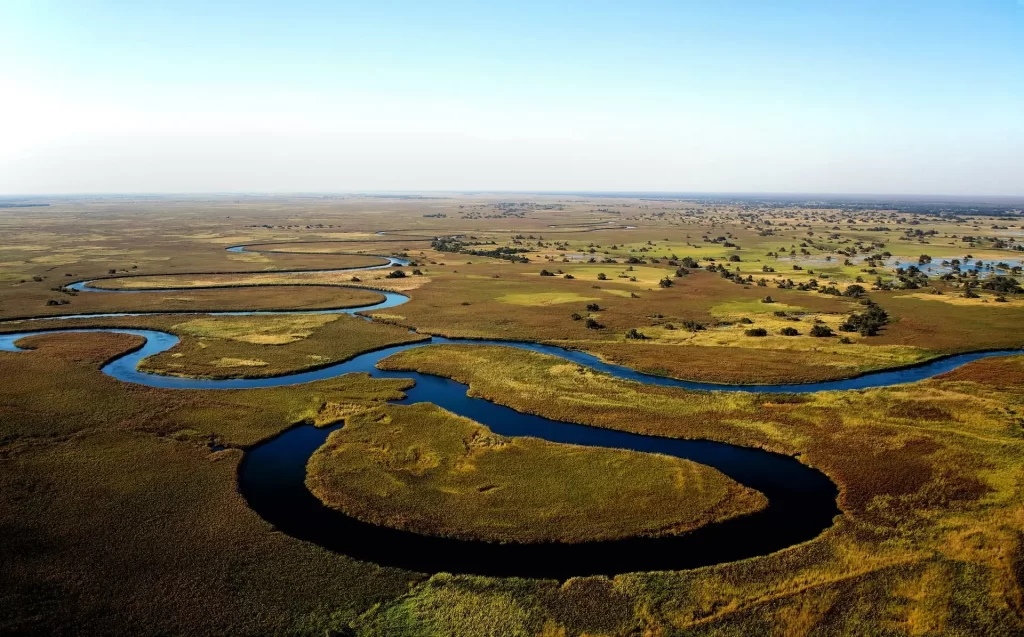
The Okavango Delta
No one said an African safari can only happen on dry land. If you like water safaris then a trip to the Okavango Delta will be satisfying.
The Okavango Delta is the biggest inland delta in the world, with the Okavango River pouring its waters into the Kalahari desert. As opposed to an ocean, or something…
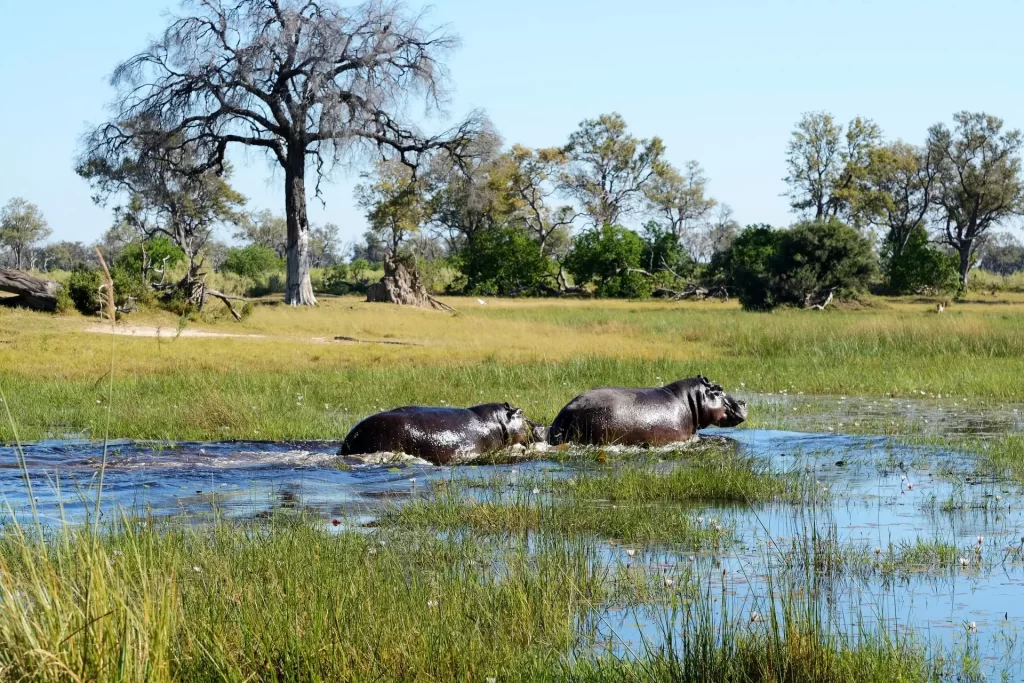
The result? A beautiful waterlogged oasis sporting crystal clear channels and lagoons, reeded islands, and lush floodplains. You can traverse the complex waterways on a Mokoro canoe (traditional boat) and who knows, chance upon a hippo or two.
Hippos at Okavango Delta
The Okavango Delta attracts a range of wildlife including herds of elephants, giraffes, buffaloes, antelopes, rhinos, zebras, and baboons. On their tail, you’ll also find lions, wild dogs, spotted hyenas, cheetahs, leopards, and Nile crocodiles.
Let’s not forget the birds – they love this delta, especially in September when the shallow waters start to dry up leaving fish stranded. These birds just swoop down and gobble them up.
Hwange National Park, Zimbabwe
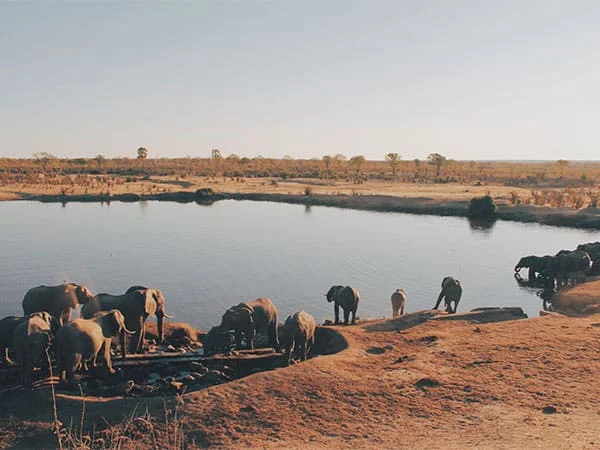
Elephants at a waterhole in Hwange National Park
Once upon a time, the Hwange National Park was a royal hunting ground for the Matabele King, Mzilikazi Khumalo. We can imagine why.
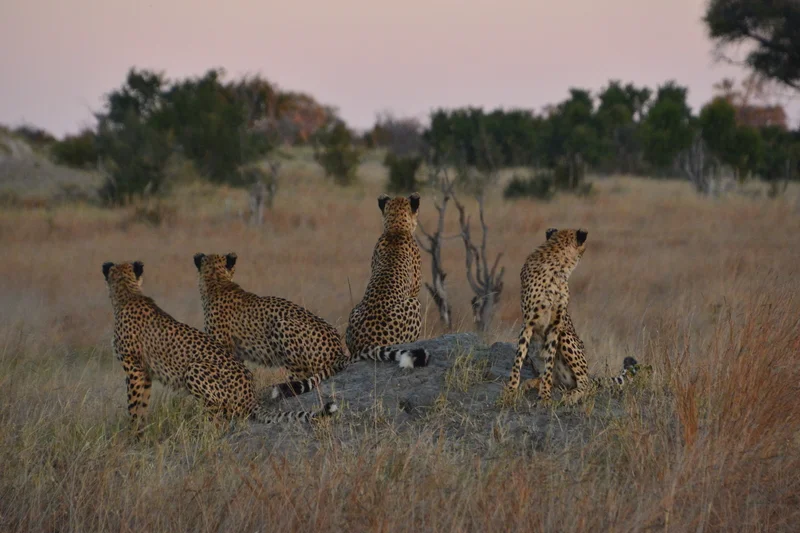
Not only is Hwange one of the largest parks in Zimbabwe but also boasts a dense concentration of wildlife. It is home to thousands of elephants, impressive packs of wild dogs, strong lion prides, giraffes, antelopes, buffaloes, leopards, and cheetahs.
Leopards of Hwange National Park
Hwange lies on the border of Botswana and Zimbabwe meaning its ecosystem encompasses both the harsh Kalahari desert and lush highland vegetation. On a trip to this park, you will notice Kalahari sands, thick Mopane woodlands, rocky terrain, and vast grasslands.
Thanks to its remote location, the park receives fewer visitors making it ideal for those who prefer less crowded pristine destinations.
Kruger National Park, South Africa
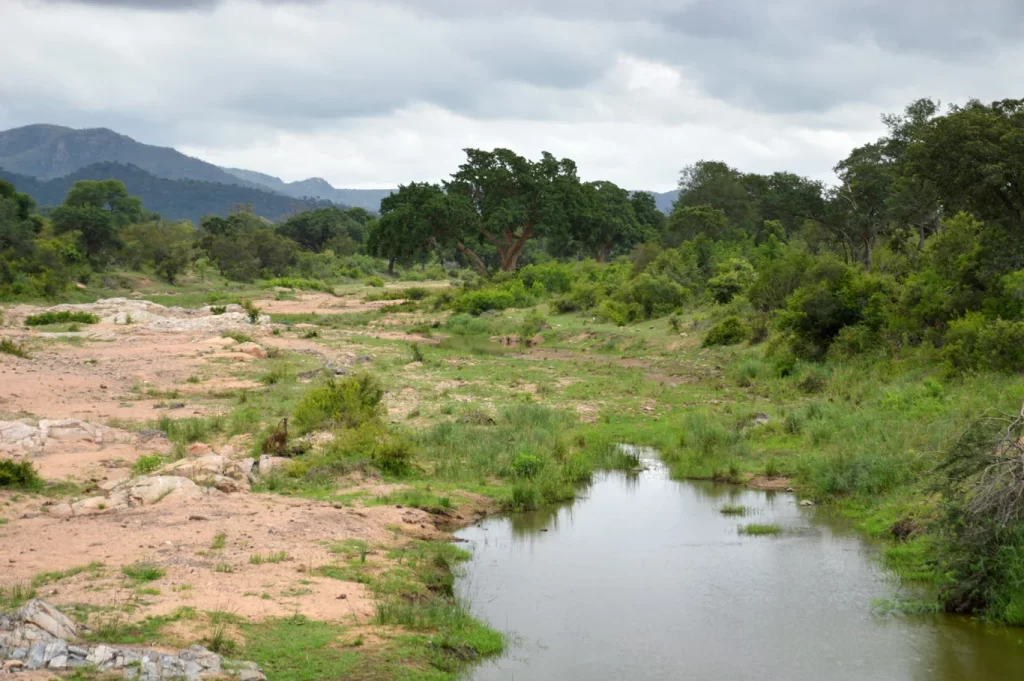
Kruger National Park in South Africa
On the Northeastern side of South Africa is Kruger National Park, one of the few national parks in Africa with a paved road network.
The obvious advantage? A fantastic chance to cover large distances without worrying about weather conditions and see more wildlife and landscapes
The flip side?
It sort of takes away from that “authentic bush experience. Furthermore, vehicles aren’t allowed to go on off-road drives which might limit your ability to see wildlife and catch some predator-prey action.
Still, the wildlife at Kruger is used to vehicles and they have no problem drawing near to them.
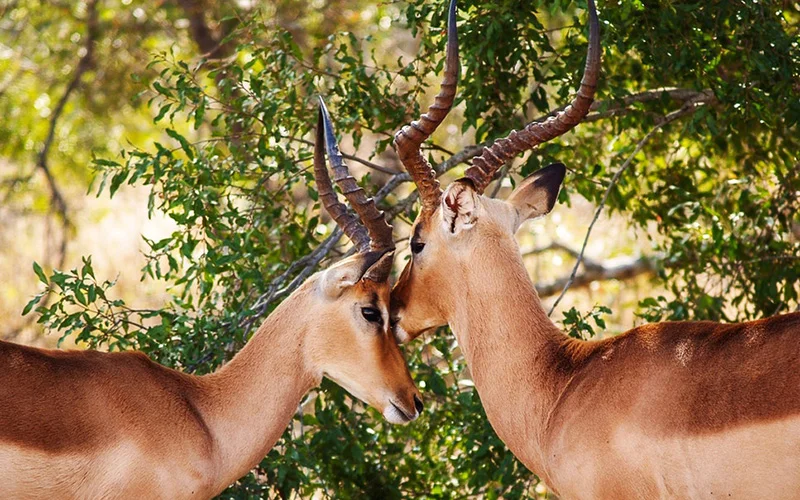
I wonder what they are talking about
Kruger National Park comprises six ecosystems from Mopani veld to Lebombo knobthorn veld, Baobab sandveld, acacia thicket, woodlands, and riverine forests.
The red rocks, dramatic sandstone ridges, open grasslands, low rolling hills, rocky outcrops, and forest vegetation make the perfect photographic Africa jungle safari.
South Luangwa National Park, Zambia
Boat Safaris in South Luangwa National Park
If your idea of an African safari involves a remote park where the environment is unspoiled, wildlife abundant, and away from the crowds say hello to South Luangwa National Park.
Hidden in the eastern side of Zambia is this gem of a park where wild Africa jungle safari starts.
It is at South Luangwa National Park that walking safaris were born. For the adventure lover, the thrill of a guided walk through big-game country is unbeatable. Speaking of big game, the park hosts four of the big five animals—the rhinos were sadly poached to extinction.
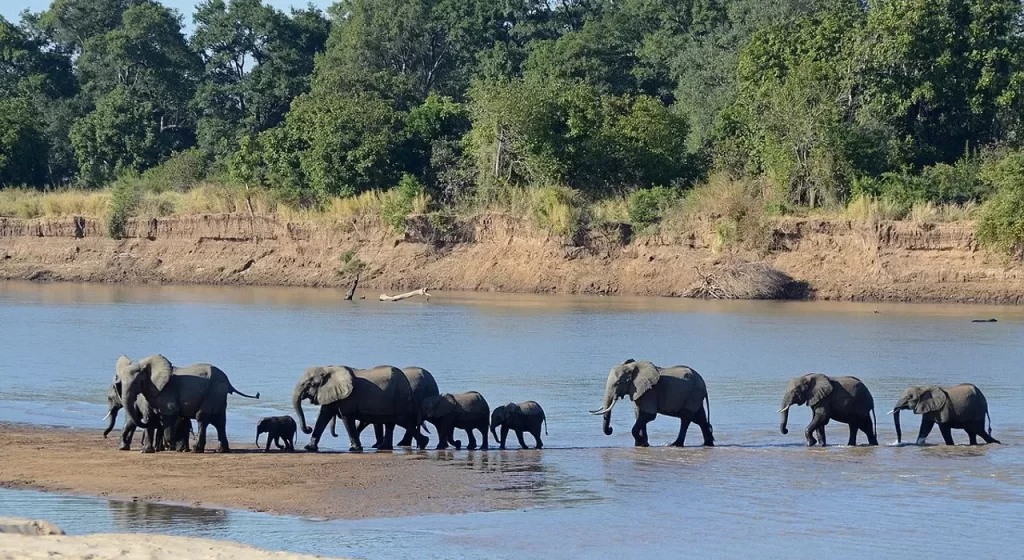
A herd of elephants at South Luangwa National Park
In the midst of the dense forests and open savannah, you will find elephants, buffaloes, Thornicroft giraffes, antelopes, zebras, and vervet monkeys. Hippos and crocs lurk in the winding Luangwa River, the park’s lifeline.
Some lodges offer boat safaris that will have you cruising through reedy islands and hippo pods while watching wildlife quenching their thirst along the river banks.
Namib-Naukluft National Park
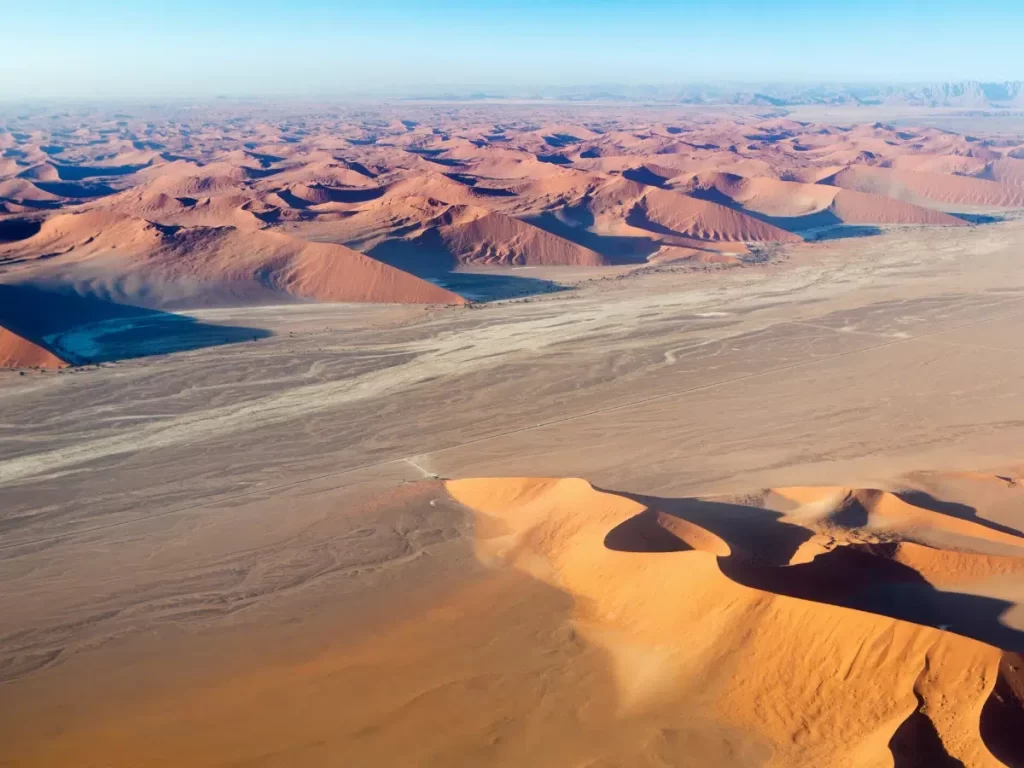
Red sand dunes of the Namib-Naukluft park, Nambia
The grandeur of the Namib-Naukluft National Park is not to be missed. Every region of this national park is starkly different yet hauntingly beautiful and an adventurer’s dream.
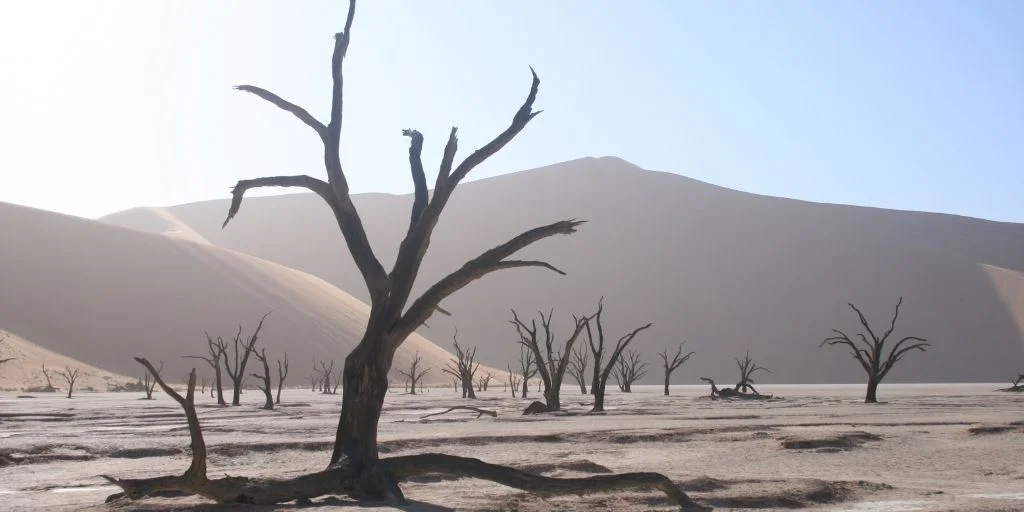
The Namib-Naukluft National Park rewards its visitors with spectacular sights. It is known for its towering mountains, ever-shifting, color-changing sand dunes, rugged coastlines, dramatic skeleton tree trunks, and deep canyons where rivers rage without warning.
It is as eerie as it is stunning and even good for the soul.
Ghostly thorn trees of the DeadVlei, Namib-Naukluft National Park
Despite these extreme features, some plants and animals have found a way to survive. Surprisingly, the park is home to a lot of animals like oryxes, Hartmann’s mountain zebras, duikers, gemsbok, leopards, bat-eared foxes, and African wild cats
Geckos, lizards, spiders, beetles, chameleons, and snakes can be seen in the park. The alien-like Welwitschia, aloe plants, acacia thorn trees, and cluster figs also have a place here.
Our senior consultant, James Gatheru, will help you arrange a satisfying Africa tour package, that will leave you hungry for more. You just need to show up and we will take it up from there.
Game viewing is undoubtedly top on your list of things to experience in Africa. The parks we mentioned above offer some of the most satisfying views of wildlife in their natural habitats.
As you plan an African wildlife safari to these national parks, here are some more experiences you can enjoy.
Known for its sandy white beaches, magnificent landscapes, abundant wildlife, and warm people, here are some of the best things to do on an African safari in Kenya.
Visit Lake Nakuru National Park
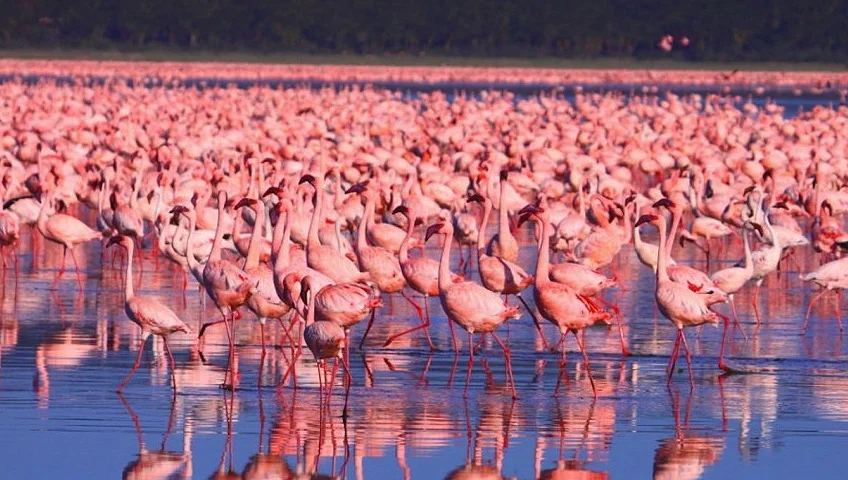
Flamingoes at Lake Nakuru National Park
With breathtaking viewpoints and a shallow lake that attracts hundreds of pink flamingoes, waterfalls, and fantastic wildlife, Lake Nakuru is great for wildlife viewing and photographic safaris.
You can see four of the big five (leopards, lions, buffaloes, and rhinos), warthogs, giraffes, hippos, baboons, vervet monkeys, colobus monkeys, and birds.
On a trip to Lake Nakuru National Park, you will have the chance to hike up trails, go on game drives, enjoy a picnic, and camp.
Go on a Beach Tour Safari
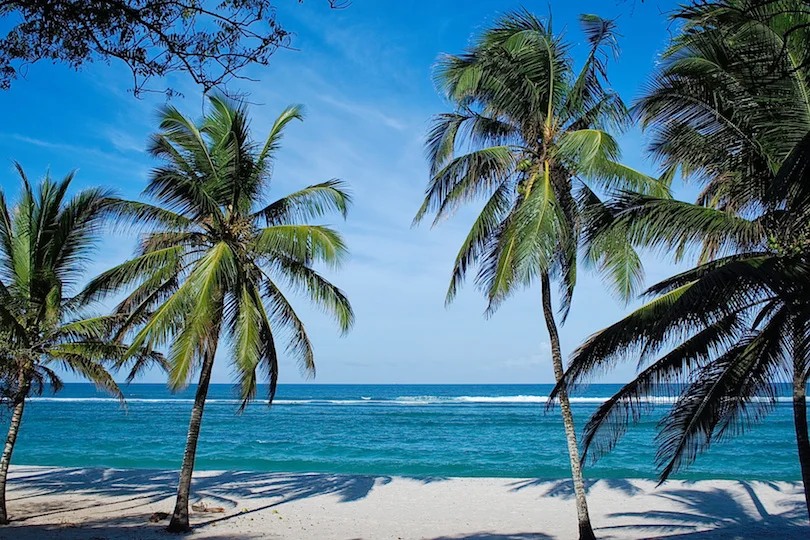
The pristine Kenyan Coast
Laze on the beach, swim, enjoy water sports, or stroll around the coastal towns, a beach safari is as relaxing as it is adventurous.
Whether in Mombasa, Lamu, Watamu, or Malindi, you will enjoy fantastic ocean views, sample delectable local meals, and interact with the locals.
Most of these towns have cultural museums where you can learn about their rich heritage.
Hang out in Nairobi City
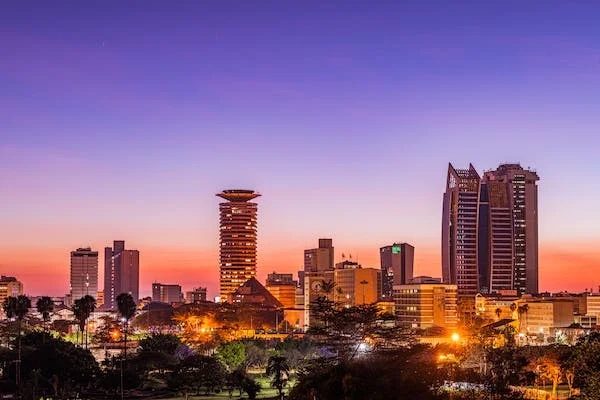
Nairobi City
Nairobi has a lot of attractions to keep you occupied and having fun all day. You can visit the Nairobi National Park, hike at Karura Forest, or hang out with elephants at the David Sheldrick Elephant Orphanage.
The city’s nightlife is ever-bustling. If you want to chill out with the fun-loving city dwellers and enjoy dinner, drinks, and good music, Nairobi is the place to be.
Top Experiences To Do in Tanzania
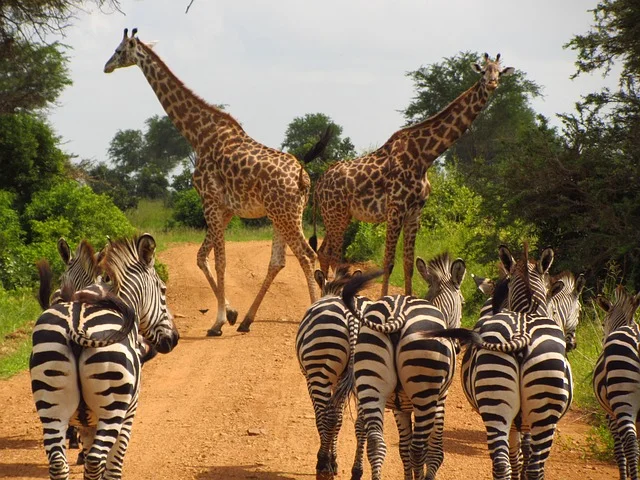
Wildlife at Mikumi National Park, Tanzania
We all know that a safari in Tanzania is not complete if you tour the Serengeti National Park, but besides the Serengeti, here are other experiences worth experiencing
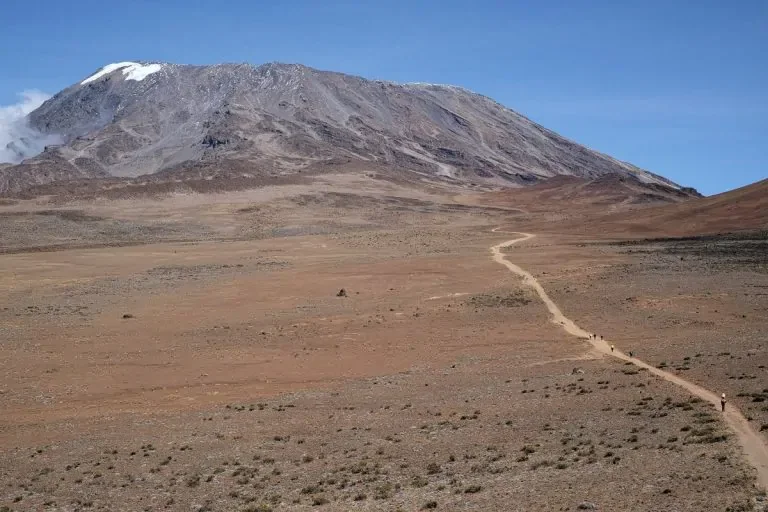
Hike Up Mount Kilimanjaro
Views of Mount Kilimanjaro
If you are an avid hiker or love staying physically active, this grand old mountain that touches the roof of the African skies is worth climbing.
Going all the way up will take several days, but conquering the 4th highest mountain in the world will be worth the effort. The climb doesn’t require technical knowledge but you will want to watch out for altitude changes.
Spend a Night in the Underwater Room at Manta Resort
The Underwater Room, Manta Resort, Pemba
Located North of Pemba, on one of the most stunning and remote beaches is the Manta Resort. The turquoise blue waters lapping against powdery white sand are enough to leave you in awe, but that’s not all.
The resort offers a magical underwater glass-paned room where you can lie on a soft bed and watch the wonders of the coral reef. Shoals of reef fish pass by and occasionally, a curious octopus or squid could attach itself to the windows. Quite the experience.
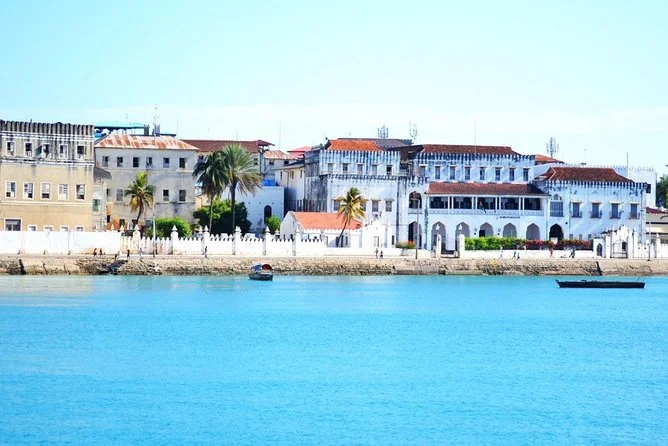
Visit the Spice Islands of Zanzibar
The home of spices - Stone Town, Zanzibar
The Arabs, Persians, Indians, and Europeans all left their mark on the beautiful islands of Zanzibar, and one of the most treasured is spices.
A tour of the spice farms will reveal how spices like cloves, cardamom, nutmeg, cinnamon, chili, turmeric, and black pepper are grown and processed.
You’ll have the chance to breathe in their exotic scents, participate in a cooking lesson, and best of all, enjoy a meal with these very spices.
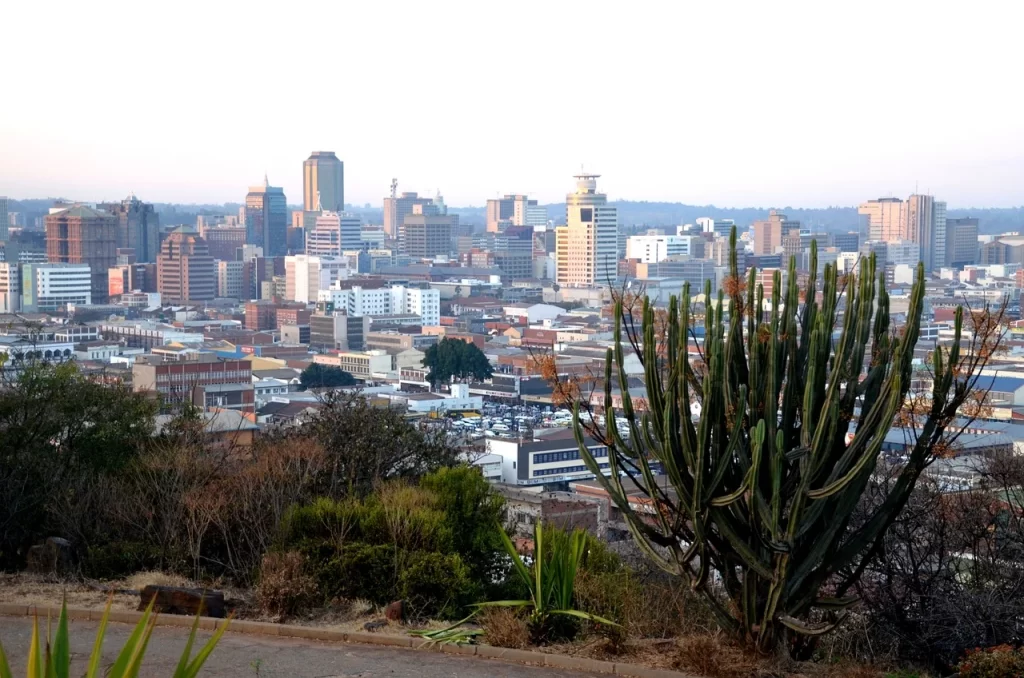
Top Experiences To Do in Zimbabwe
Harare City, Zimbabwe
If you want your African safari to be more than viewing wildlife from the confines of a safari vehicle, Zimbabwe might hold some great options. Here are some activities you can indulge in.
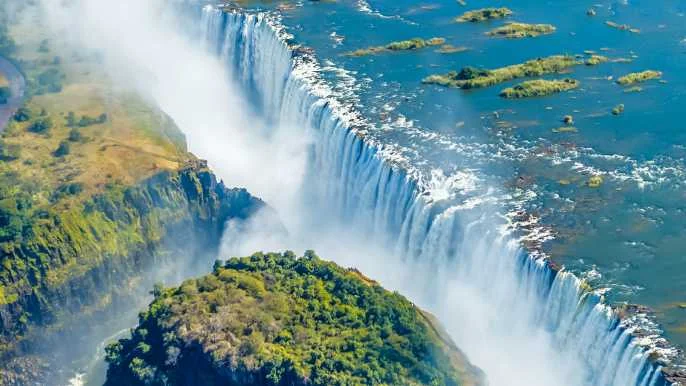
Marvel at Victoria Falls
Victoria Falls, Zimbabwe
From as far as 40 km away, you can hear the rushing waters of Victoria Falls plunging into the gorges below. With sprays of water shooting into the sky and ever-present mists, the 1.7 km wide Victoria Falls feels like something out of a movie.
It’s definitely one of the most iconic destinations on an African safari. Besides hiking up the opposing canyon to enjoy mesmerizing views of the cascading waters, brave souls can go bungee jumping or white water rafting..
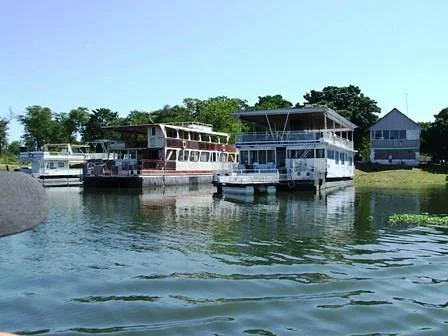
Houseboat on Kariba Dam
Relaxing in a houseboat cruise, Kariba Lake
Imagine cruising in Kariba Lake in a houseboat. Enjoying glorious sunrises and sunsets, viewing wildlife along the shoreline, and falling asleep to the sound of water gently lapping against your boat.
Ah… the delight of a water wilderness safari is worth enjoying as a couple or as a group. Perhaps such a life isn’t exclusive to celebrities – not on African safari packages anyway.
Visit the Great Zimbabwe Ruins
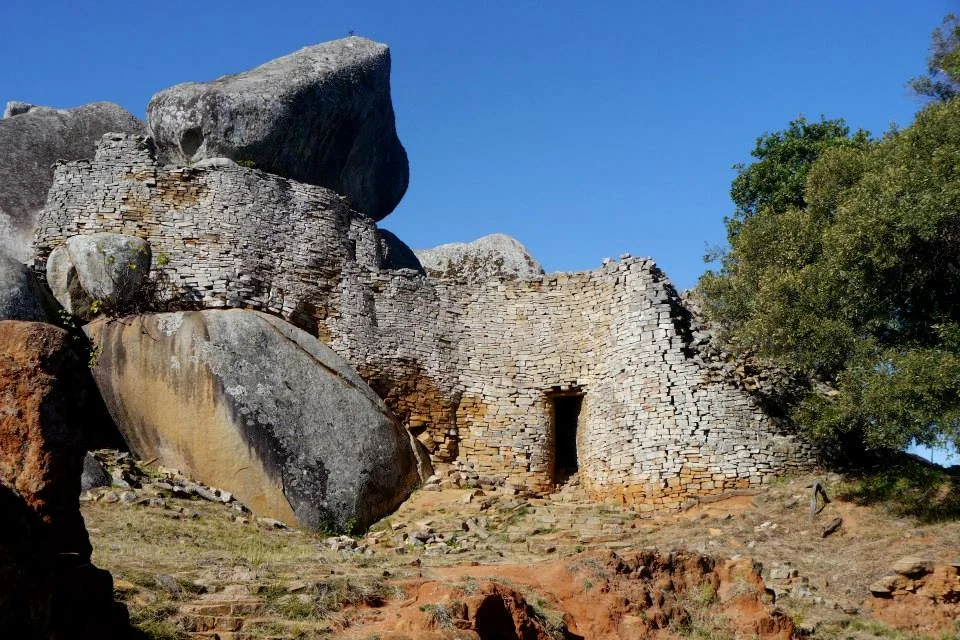
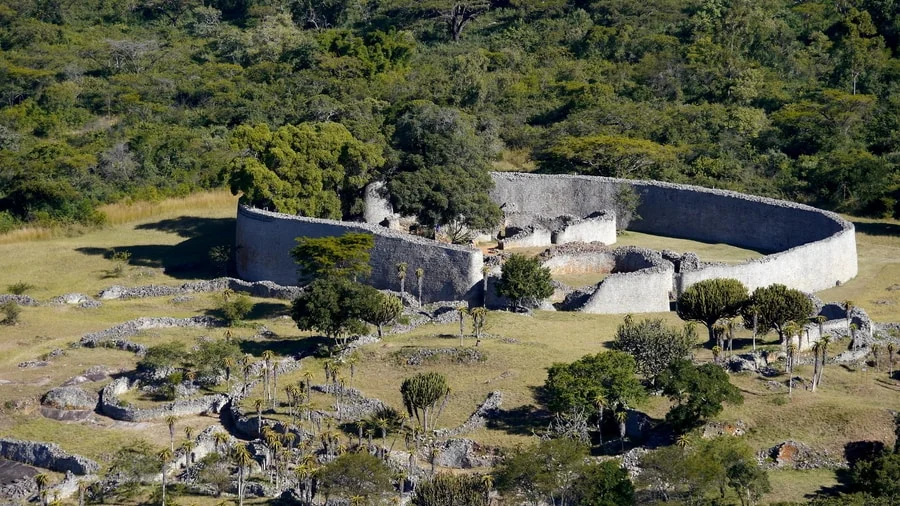
The Great Zimbabwe
Lying 30 km from Masvingo is one of the best-preserved stone ruins of a bygone African Iron Age city. It is said that the Great Zimbabwe stone buildings date back to the 12 and 15th centuries and were at the heart of a thriving trading empire.
A lot of skill went into building The Great Zimbabwe
More than 700 hundred years later, the walls are still standing, which is quite a marvel considering no mortar was used in their construction.
Top Experiences To Do in South Africa (Cape Town)
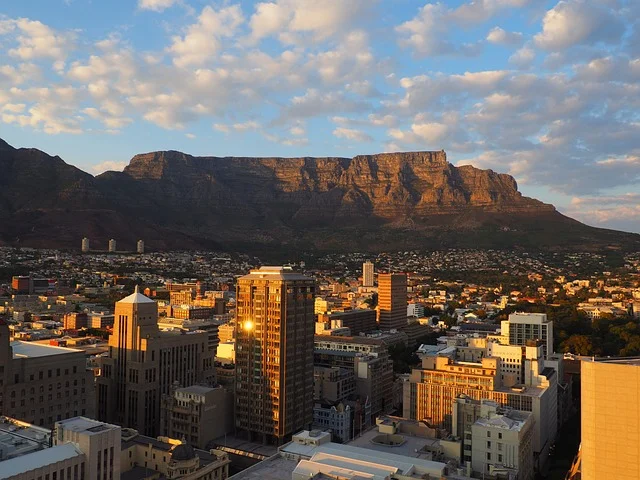
Cape Town, South Africa
As the bad boy of the continent, South Africa, will grab you in a whirlwind and swirl you round and round until it’s time to leave.
From sun-kissed beaches to the “oh, how colorful” Bo Kaap neighborhood, and Kirstenbosch National Botanical Garden, every destination will leave you spellbound.
Top experiences in South Africa, more specifically, Cape Town include
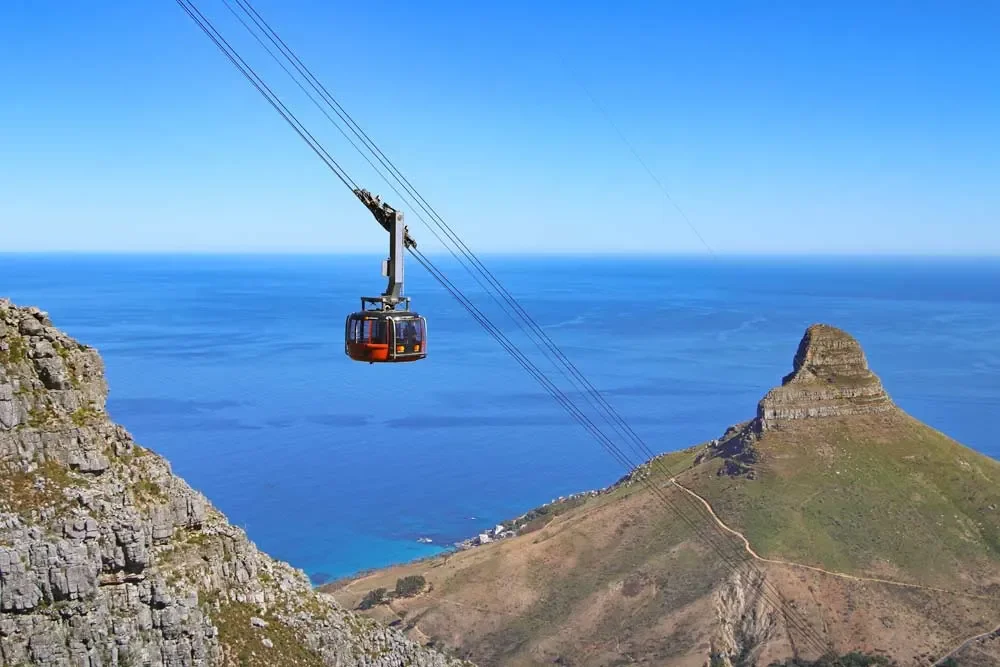
Grab a Cable Car up Table Mountain
Cable car ride to Table Mountain
Whizzing up to Table Mountain in a cable car is one of the most exciting experiences you can enjoy.
This is a five-minute drive that offers awesome views of the city and its beautiful beach and the rocky mountainside. Atop Table Mountain, you’ll find a restaurant, souvenir shop, walking routes, and fantastic lookout points.
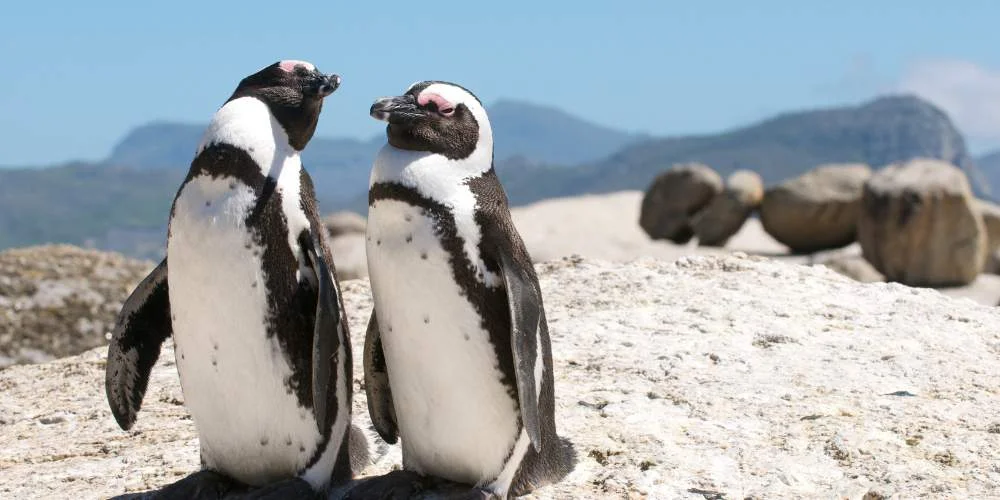
Hang Out With Penguins at Boulders Beach
Penguins at Boulder Beach, Cape Town
If you loved the Penguins of Madagascar movie, you’ll enjoy hanging out with these cute guys at Boulders Beach.
Unlike most animals you’ll see on an African safari that will shy away from visitors, these penguins are curious enough to waddle between you. They will even speed past you while you swim. How’s that for shared space?
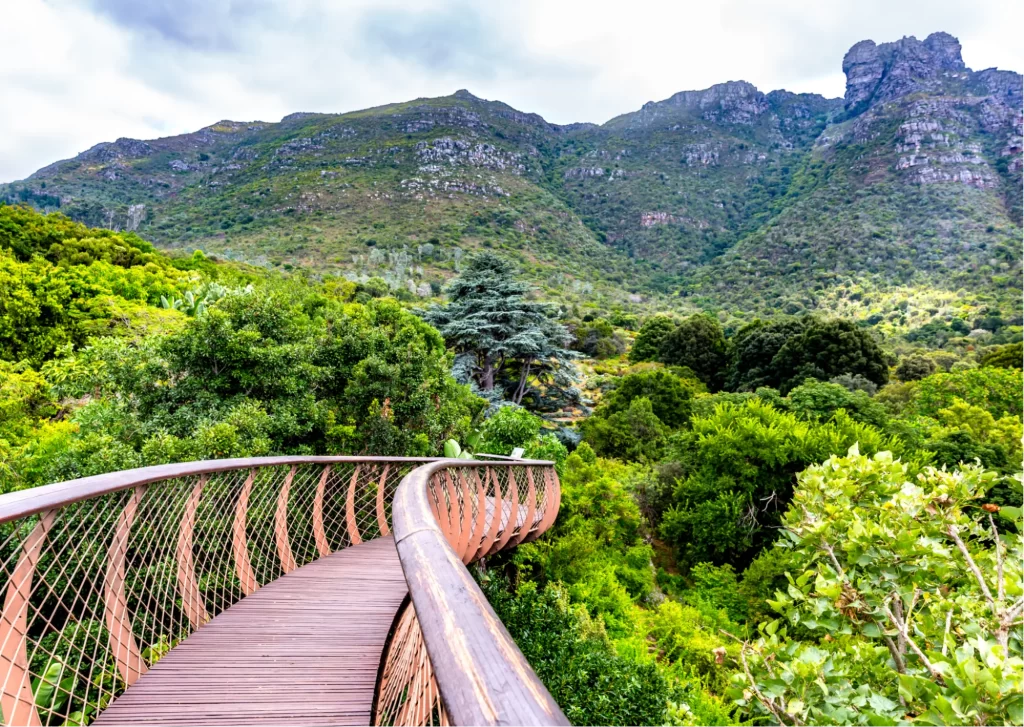
Visit Kirstenbosch National Botanical Garden
The beautiful Kirstenbosch Botanical Garden, Cape Town
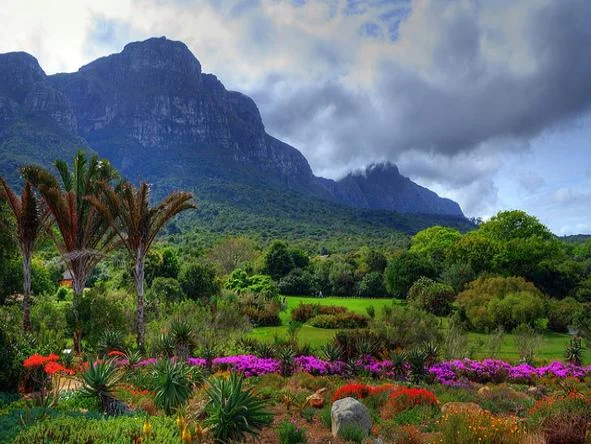
A South Africa jungle safari is not complete without a visit to Kirstenbosch. This is one of the most alluring gardens in South Africa and is home to plants (like the Cycads) that date back to the dinosaur age.
It’s a fantastic place for a photography safari, hiking, relaxing, and enjoying a picnic. Local restaurants offer picnic basket sets that include gluten-free, vegetarian, and pescatarian options.
The lush gardens of Kirstenbosch Botanical Garden
In the summer, live music concerts are held at Kirstenbosch and can be a fun way to discover South African music and the local people.
Places to Stay on African Safari
Royal Malewane, Cape Town, South Africa
There are accommodation options to fit every budget. Talk to your tour operator to secure an African safari package that lines up with your needs.
Here are top examples of accommodation facilities that you can stay in on your safari
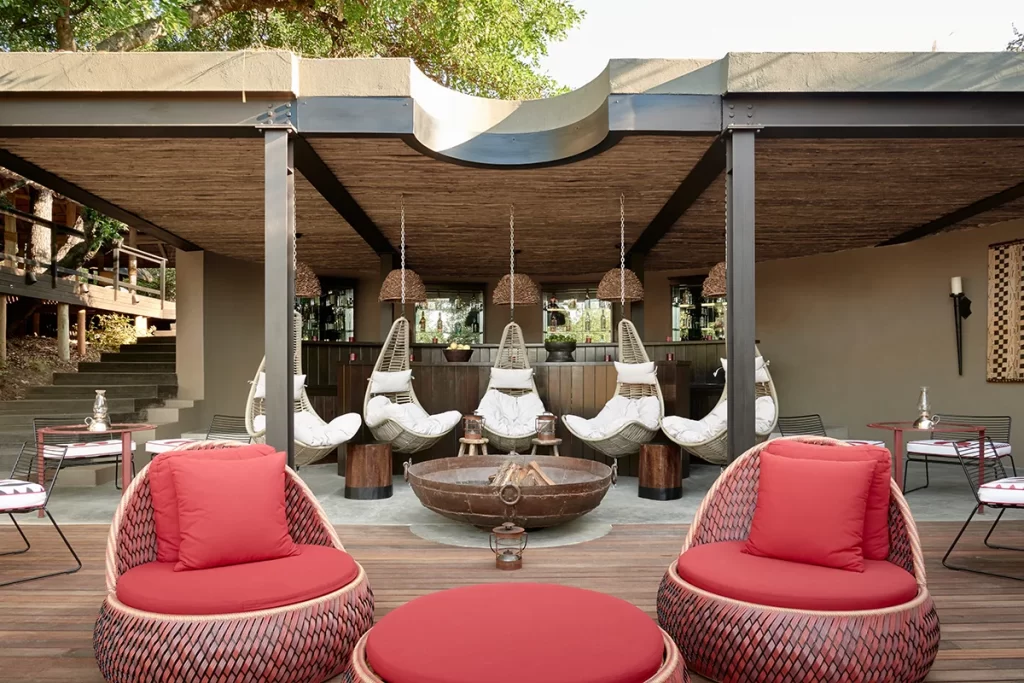
Kenya Safari Package: Accommodation at the Masai Mara National Park
The luxurious Olare Mara Kempinski Masai Mara, Kenya
Mid-range accommodation: Governors Camp, Richard’s River Camp, Keekorok Lodge, and Naboisho Camp.
Budget accommodation: Oseki Maasai Mara Camp, Maji Moto Eco Lodge, Enaidura Mobile Camp, and Jacaranda Bush Camp and Resort.
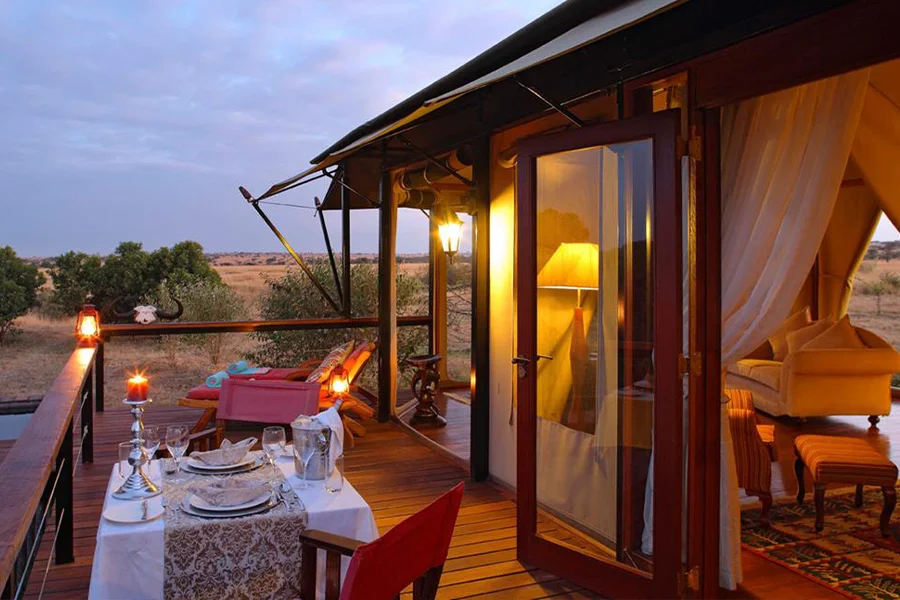
Tanzania Tour Safari: Accommodation at Serengeti National Park
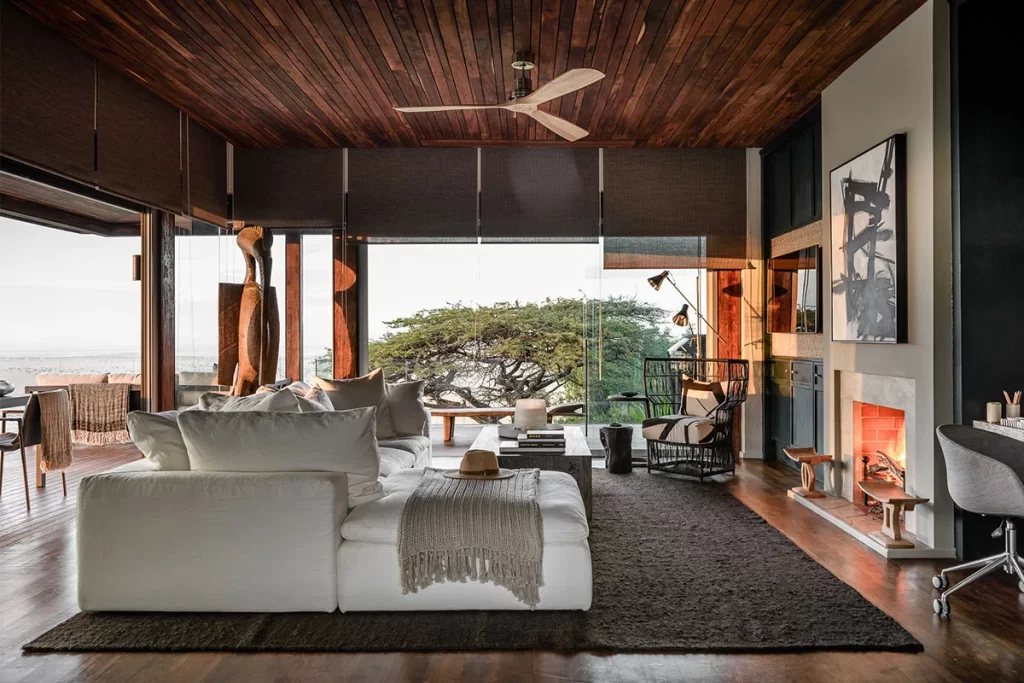
The unparalleled Singita Sasakwa Lodge, Serengeti
Luxury accommodation: Four Seasons Safari Lodge Serengeti, Singita Sasakwa Lodge, Namiri Plains luxury tented camp, and Highlands Camp (in Ngorongoro crater).
Mid-range accommodation: Embalakai Tented Camp,Seronera Wildlife Lodge, Kirurumu Ngorongoro, and Ngorongoro Tortilis Camp (the last two are in Ngorongoro crater).
Budget accommodation: Serengeti Sound of Silence, Serengeti Mawe Camp, Africa Safari Maasai Boma, and Simba campsite Ngorongoro.
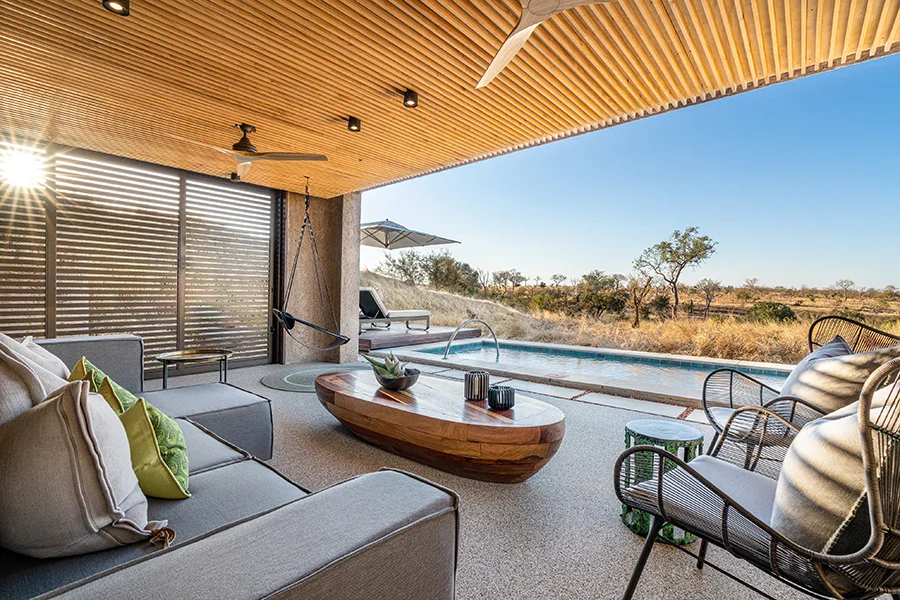
South Africa Safaris: Accommodation at Kruger National Park
Award-winning Sabi Sabi Earth Lodge, Cape Town
Luxury accommodation: Londolozi Private Granite Suites, Savanna Private Game Lodge, Royal Malewane, and Singita Sweni Lodge.
Mid-range accommodation: Jock Safari Lodge Kruger National Park, andBeyond Ngala Safari Lodge, Lion Sands River Lodge, and Kapama Southern Camp.
Budget accommodation: Kruger Park Hostel, SleepOver Kruger Gate, Letaba Rest Camp, and Olifants Rest Camp.
What Is the Best Month To Go on an African Safari?
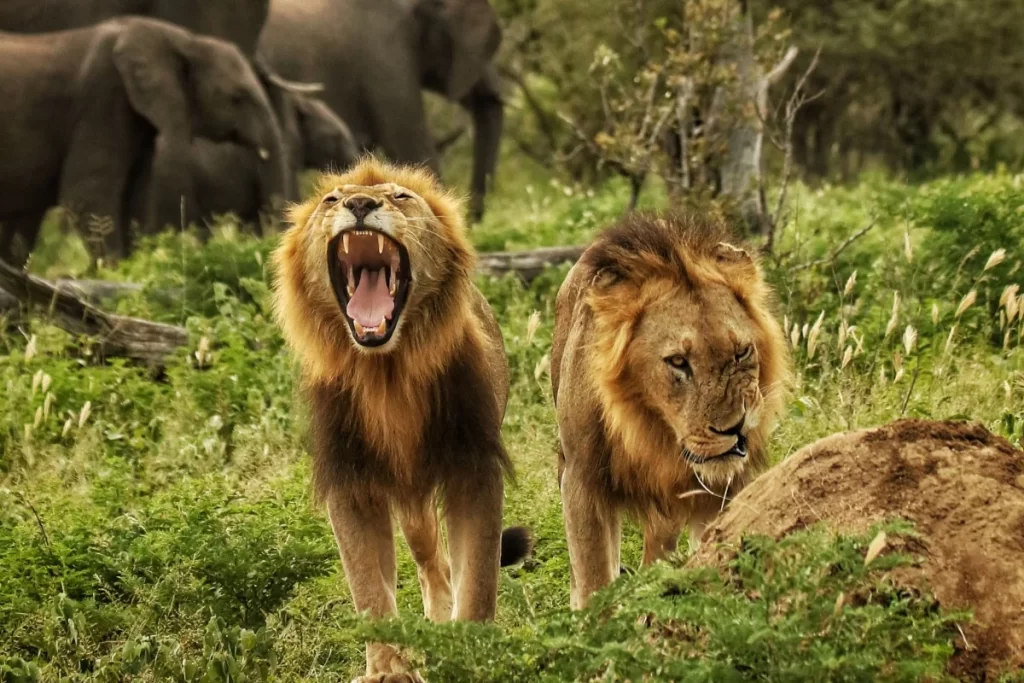
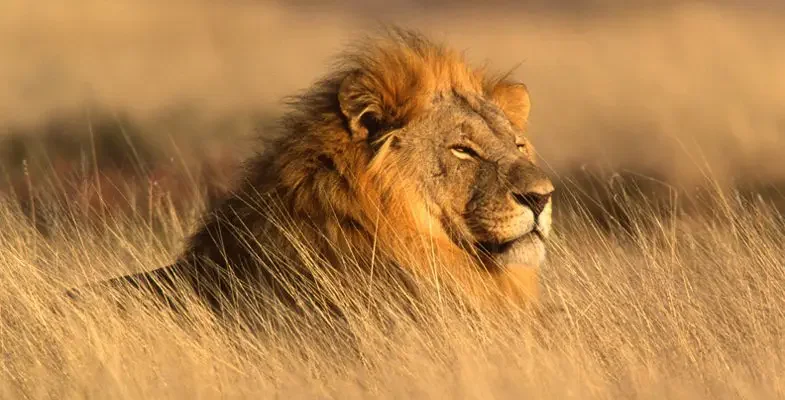
This lion could use a meal
Most national parks in Africa offer year-round game viewing meaning you can come down at any time for a safari. There are certain months, however when your safari can be more thrilling.
A trip to the Masai Mara National Park and the Serengeti National Park is more favorable in the dry months of June through to late October when wildlife is easier to spot and the wildebeest migration occurs.
Sunny skies are at their best in June, August, then December-February in Uganda so a visit to Bwindi Impenetrable National Park is best done then. Similarly, June, August, and then September to October are the best times to be at the Okavango Delta.
May to October is ideal for a South Africa jungle safari while venturing into Hwange National Park in Zimbabwe is more rewarding in August through to early November. As for the Namib-Naukluft National Park, May to October are cooler, and therefore the most comfortable months to go there.
Book Your Safari Today
Africa is a memorable tourist destination serving up satisfying safari experiences. When you’re not hanging out with the wildlife, you can learn about the continent and its people and their culture. For the best safari in Africa, talk to us today.